Literary Lisbon: Saramago Route Stops, Alfama and Bairro Alto
Saramago's Lisbon runs from the Casa dos Bicos to Rossio and out to Mafra. Official pages describe each stop, plus Alfama and Bairro Alto.
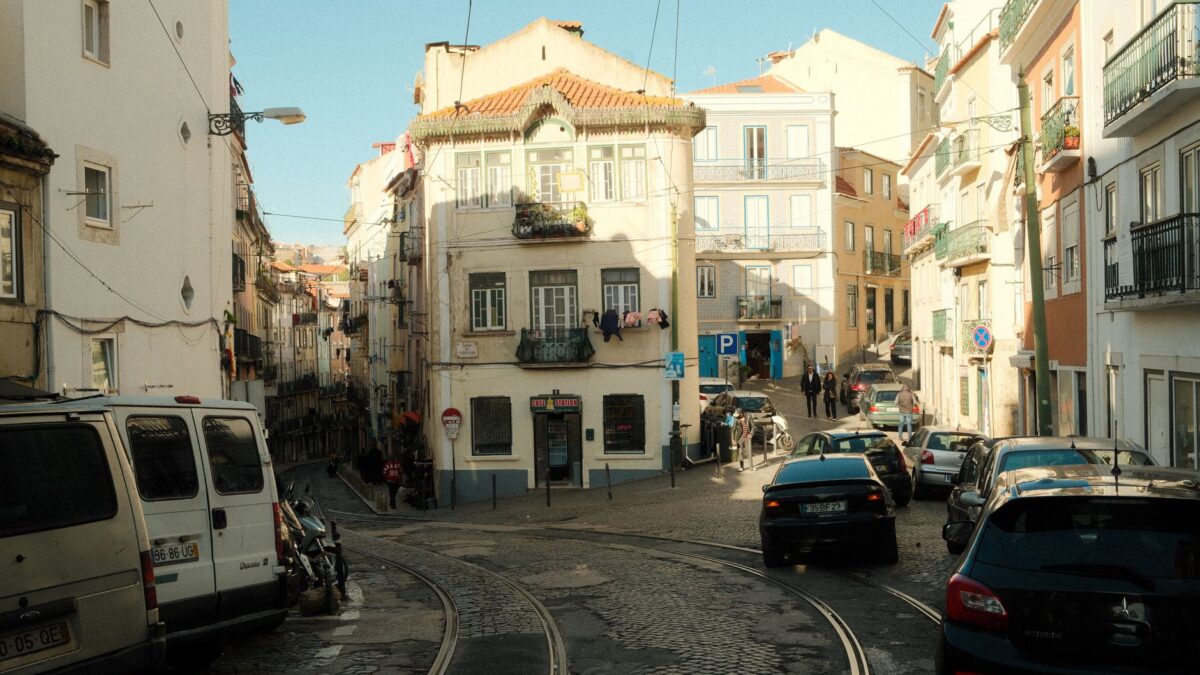
The José Saramago route in Lisbon follows places from his novel Baltasar and Blimunda: the Casa dos Bicos, where his ashes lie, the square called Rossio, the hill below the castle and the riverside, then the monastery at Mafra outside the city. The official pages used here cover Saramago, Alfama and Bairro Alto. They say nothing about a Fernando Pessoa route, so for Pessoa check Visit Lisboa directly.
The Saramago stops below come from the Visit Lisboa Saramago Route page. Two neighbourhoods follow, taken from the tourism board’s own place pages.
Casa dos Bicos
The building is clad in carved, diamond-shaped stone, and Visit Lisboa says it looks like something imagined by the author of Baltasar and Blimunda. Inside is a permanent exhibition on Saramago’s life and work. His ashes lie under an olive tree at the front of the building.
It suits readers who want to start where the writer is remembered. Opening hours and tickets are not given on the route page, so confirm them before you go.
Rossio
The official name of the square is Praça D. Pedro IV, though everyone says Rossio. In the novel, the lovers Blimunda and Baltasar saw each other for the first time here while watching an auto-de-fé (a public ceremony of the Inquisition). Today a tribute to the people executed on the square by order of the Inquisition stands there.
The route page also describes it as one of the oldest and most iconic squares in Lisbon, which makes it an easy stop to combine with the rest of the centre.
The hill below the castle
This is one of Lisbon’s seven hills. Walk up toward the castle and the whole city can be seen at a glance, with old houses winding along narrow streets. In the novel, Blimunda took Baltasar here on the day they met.
Lisboa Story Centre, riverside square
This square sits on the Tagus and was the departure and arrival point for mariners in the age of the discoveries. Frei Bartolomeu de Gusmão, inventor of the flying machine called the passarola, lived here. In the novel the passarola carries the protagonists to Mafra. The Lisboa Story Centre, on the square, holds a replica of the machine. For more waterside stops, see five riverside walks along the Tagus.
Jesuit church from the 16th century
Visit Lisboa lists a Jesuit church built in the 16th century, the main Jesuit church for over 200 years and one of the first of its kind in the world. Inside are Italian masterpieces, including mosaic paintings by Mattia Moretti and a set of coloured marble statues. In the novel, Saramago writes that Maria-Ana of Austria, queen of Portugal, liked to pray her novenas in this church.
Mafra, monastery and palace
Mafra is outside the city, but the route page gives it the most space. The basilica was designed by João Frederico Ludovice, whom Saramago mentions in the novel. It is baroque, flanked by bell towers, with six organs commissioned by João VI and a dome 65 metres high, the first built in Portugal.
Other rooms named on the page:
- The infirmary, with small compartments holding straw beds that face the chapel, so patients could watch mass.
- The king’s private chapel, clad in Portuguese stone including lioz, a rare limestone in pink, green and ivory hues.
- The king’s bedroom, with a square imperial-style bed measuring 2m x 2m, used by the monarchy until the death of King Fernando in 1885.
- The Hall of Destinies, with a ceiling by Cirilo Volkmar Machado.
- The Guard Room, where the painted central figure on the ceiling seems to follow you as you walk the room.
- The Library, T-shaped and 84 metres long, with 30,000 books on rococo shelves, the oldest from 1472 and the newest from 1820. Part of the collection came from the Inquisition. Its catalogue is a manuscript that took ten years to complete.
Tapada de Mafra
João V created this hunting reserve in 1747, after building the monastery. It covers 1,200 hectares and is surrounded by a 21km-long wall. The page says visitors can tour it by train or electric car, practice archery, take a falconry workshop, walk or cycle the trails, or stay overnight.
Alfama
The Visit Lisboa page on Alfama calls it the oldest and most traditional neighbourhood in Lisbon, with cobbled lanes and steep inclines. It recommends walking. It names Beco do Quebra-Costas, a street that has existed since 1565, and Cruzes da Sé, with references from 1690.
The Sé (cathedral) dates from 1147 and still shows the Tesouro (treasury) and the Roman ruins that preceded it. Farther up, the Miradouro de Santa Luzia looks over the Tagus, and the Castelo de São Jorge has a City Information Centre. Portas do Sol has outdoor cafés. Alfama also has Fado houses.
Bairro Alto
The Visit Lisboa page on Bairro Alto describes the neighbourhood by night: bars and restaurants, then Bica, then Cais do Sodré for clubs and old sailors’ bars. By day it has alternative shops, from records to art and hairdressers.
Tips for visiting
- Pair the hill, Alfama and the castle in one walk, since Visit Lisboa describes them as a climb. Expect steep, cobbled streets.
- Treat Mafra as its own outing, as it lies outside the city.
- The history museums in our guide to Lisbon’s history and archaeology museums pair well with the Inquisition and monarchy themes of the novel.
- For cold or wet days, see things to do in Lisbon in winter.
Before you go
Opening hours, ticket prices and tour options for the Casa dos Bicos, Mafra and the Tapada are not on the pages used here, so check the Visit Lisboa route page and each site’s own page. Hours and prices at monuments tend to change by season.
Facts from the official pages linked above, as of November 2026.
Site editor: Nikita Sheikin