How to Set Up Electricity, Gas, Water and Internet in Lisbon
You have the keys, now you need power, water and Wi-Fi. Who supplies what in a Lisbon rental, which documents each company asks for and what the lines on the bills mean.
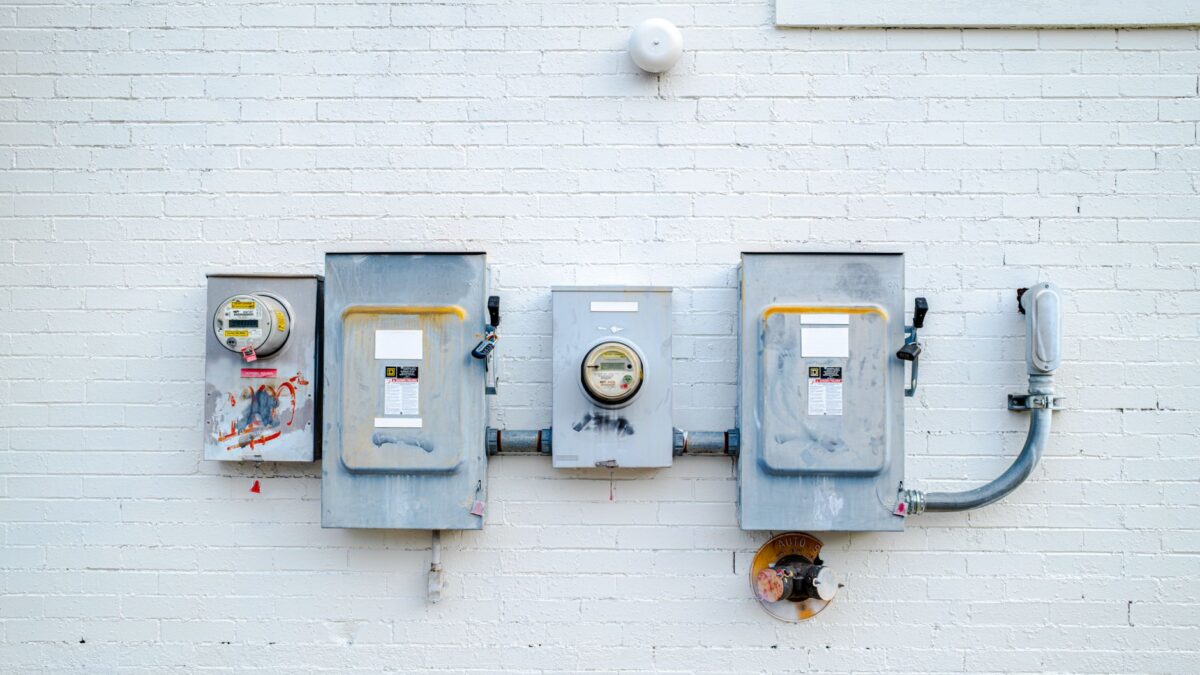
In a Lisbon rental, water is supplied only by EPAL (Empresa Portuguesa das Águas Livres, the city’s water company), while electricity, natural gas and internet are open markets where you choose the supplier. Every contract needs your ID, a Portuguese tax number (NIF) and proof that you occupy the home, usually the lease. Signing a water contract with EPAL is free.
Prices and discounts below are as of November 2026. Energy prices change often; the energy regulator ERSE (Entidade Reguladora dos Serviços Energéticos) publishes current tariffs and a price comparison tool.
Who supplies what in a Lisbon apartment?
| Service | Who you sign with | Code or detail to have ready |
|---|---|---|
| Water, wastewater, waste collection | EPAL (single supplier in Lisbon) | Meter reading, property tax article and unit (artigo matricial and fração) |
| Electricity | Any licensed supplier, or the regulated last-resort supplier | CPE, the supply point code printed on old bills |
| Piped natural gas | Any licensed gas supplier, or the regulated last-resort supplier | CUI, the gas supply point code |
| Bottled gas | A gas distributor or shop that exchanges cylinders | None; you buy or rent the cylinder |
| Internet, TV, mobile | Telecom operators | Address coverage check |
Ask your landlord, before you move in, for the last bills or at least the CPE and CUI codes, and photograph every meter on day one. If the previous tenant’s contract is still active, the supplier can usually switch the account to your name rather than reconnect.
What documents do I need to open the accounts?
Every supplier asks for roughly the same set: an ID document (passport, residence card or Cartão de Cidadão), your NIF, the lease or deed, and a bank account number (IBAN) if you pay by direct debit. If you do not have a NIF yet, read how to get a NIF in Portugal first, since the contracts are issued under it. A Portuguese bank account makes direct debits simpler, although many suppliers accept any SEPA IBAN.
For water, EPAL lists: an ID document, your taxpayer card, a meter reading (preferably a photo) and proof that you lawfully occupy the property, such as a lease, loan-for-use agreement (comodato), property tax record (caderneta predial) or purchase deed, showing the tax article and unit plus the owner’s name and NIF.
How do I set up water with EPAL?
EPAL contracts can be signed online, by phone or at an EPAL shop, and EPAL charges nothing to sign. The steps:
- Take a photo of the water meter showing the reading.
- Fill in the new-contract form on EPAL’s new contract page, or book a slot at an EPAL shop.
- Give the number of people living in the home and the details of your lease.
- Sign the contract; a representative with a power of attorney can sign for you.
The EPAL bill also carries charges that belong to Lisbon City Council: a wastewater tariff and an urban waste tariff, each with a fixed part and a part linked to the water you use, plus state fees passed on by law. That is why the water bill is higher than the water alone.
Should I choose regulated or free-market electricity?
Most homes buy electricity on the free market, but you can still choose prices set by ERSE. Households that have not picked a supplier are served by the last-resort supplier (comercializador de último recurso) at a transitional tariff that ERSE fixes. Since 2018, any household can also ask its free-market supplier for a contract at prices equal to the regulated tariff; if the supplier does not offer one, you can move to the last-resort supplier.
ERSE reported that more than 87% of household consumption was already on the free market by September 2025. When you compare offers, check three things:
- Contracted power (potência contratada, in kVA): the maximum load before the switch trips. A higher figure costs more per day.
- Tariff option: a single rate, or two- and three-period rates that are cheaper at night and weekends.
- Bundled extras: maintenance services and loyalty conditions you may not want.
The distribution network operator, E-REDES, handles meters and outages whatever supplier you choose. Natural gas works the same way, with a regulated transitional tariff and free-market offers. Many older Lisbon buildings have no piped gas, in which case the cooker and water heater run on bottled gas or electricity.
Am I eligible for the social tariff?
Low-income households get a discount on electricity, natural gas and, in Lisbon, water, and the energy discount is applied automatically. ERSE puts the 2026 electricity discount at 33.8% of the regulated price and the gas discount at 31.2%; beneficiaries also do not pay the special consumption tax on energy.
The DGEG (Directorate-General for Energy and Geology) checks eligibility with the tax authority and Social Security and tells the supplier, so you do not need to apply. To qualify for electricity, the contract must be in your name, for your permanent home, with contracted power up to 6.9 kVA, and you must receive certain social benefits or have household income within the limit ERSE publishes. If you think you qualify and the discount does not appear, ask Social Security or the tax office for a certificate and give it to your supplier.
For water, Lisbon City Council approved automatic social tariffs for water, wastewater and waste. EPAL also offers a large-family tariff for households of five or more people.
How do I get internet at home?
Check which operators cover your exact address, as fibre is common in Lisbon but not universal in older buildings. Installation normally needs your ID, NIF, address and IBAN.
The key term is the lock-in period (período de fidelização). Under Portuguese telecom law, a lock-in cannot exceed 24 months, and operators must also offer the same service without a lock-in. A lock-in must be tied to a stated benefit, such as free installation; leaving early means paying back part of it. ANACOM, the telecom regulator, explains these rules on its consumer portal. If you expect to move within a year, the contract without lock-in may cost less overall.
How do I read my utility bills?
Look for the period, whether the reading is real or estimated, and the tax lines. ERSE says an electricity price is made up of the energy itself, a network access tariff set by the regulator, and taxes. Common lines on Portuguese bills:
- Leitura real / estimada: actual or estimated reading. Send your own reading through the supplier’s app or website to avoid large corrections later.
- Termo de potência: daily charge for contracted power.
- IEC: special consumption tax on electricity.
- CAV: the audiovisual contribution that funds public broadcasting, collected on electricity bills.
- IVA: VAT, which can apply at different rates to different parts of the bill.
- Saneamento and resíduos on the EPAL bill: the city’s wastewater and waste tariffs.
Bottom line
Get the CPE and CUI codes and photograph the meters on the day you collect the keys, and the setup is mostly online paperwork. Compare your first free-market electricity offer against the regulated tariff on ERSE’s simulator, because a plan sold door to door is not always the cheaper one.
FAQ
Can the bills stay in my landlord’s name?
Yes, if the lease says so, and the rent then often includes or recharges utilities. Social tariffs only apply when the contract is in your name, so check the lease; see renting an apartment in Lisbon.
Who do I call during a power cut?
Report outages to the network operator, E-REDES, not your supplier. For danger such as a gas smell or fire, leave the building and call 112.
Is there a deposit for electricity or water?
EPAL’s contract page lists no deposit and no signing cost. Energy suppliers set their own conditions, so read the contract summary before signing.