Bolo-Rei: Portugal’s Christmas King Cake and Where to Buy It in Lisbon
The ring of sweet bread under a layer of candied fruit fills Lisbon's pastry-shop windows every December. Where it came from, what the dried bean inside meant and which historic shops still bake it.
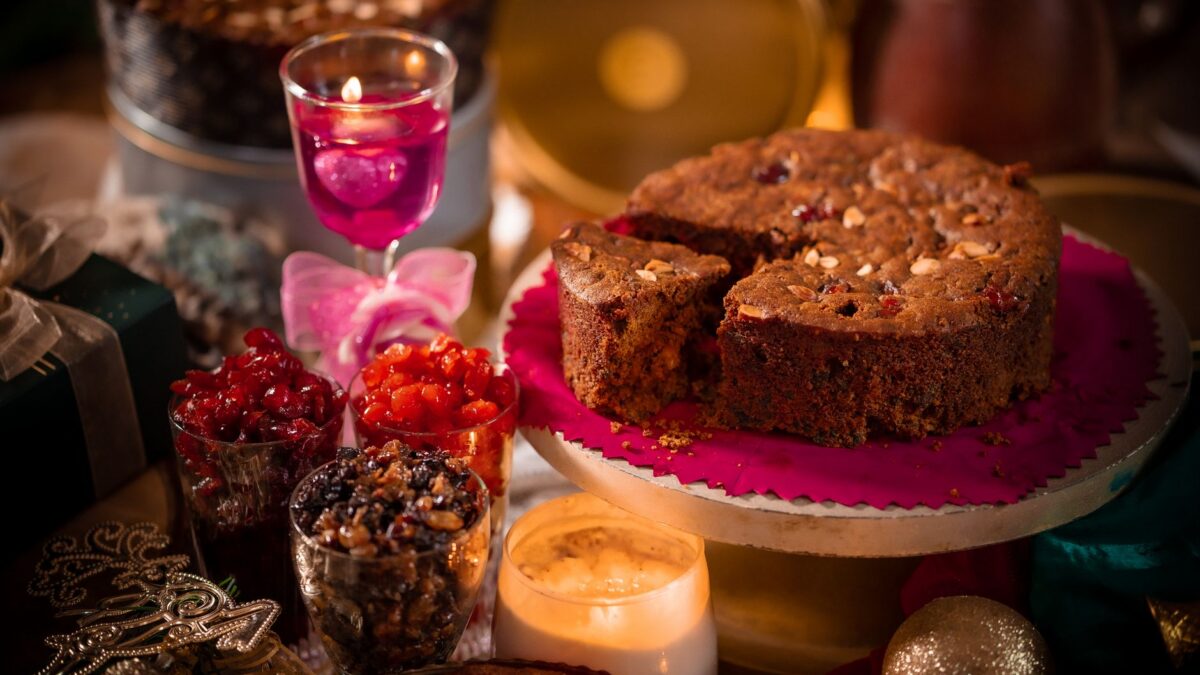
Bolo-rei (king cake) is a ring-shaped sweet bread filled and topped with candied fruit, raisins and nuts that families in Portugal eat from Christmas until Dia de Reis, the Epiphany, on 6 January. In Lisbon, Confeitaria Nacional on Praça da Figueira says it introduced the cake to Portugal in 1875 with a recipe brought from France.
Pastry shops (pastelarias) and supermarkets sell it by weight through the Christmas season. In December 2025, the consumer association DECO PROteste found prices starting at €8 a kilo in supermarkets and ranging from €13 to €30 a kilo in pastry shops and bakeries.
What is bolo-rei?
Bolo-rei is an enriched yeast dough, made with butter, eggs and sugar, shaped into a wide ring with a hole in the middle. Raisins and chopped nuts such as walnuts, almonds or pine nuts go into the dough, and the top is covered with candied fruit (fruta cristalizada), more nuts and a dusting of sugar.
The shape is usually explained as a crown for the three kings of the Epiphany, with the colored fruit as its jewels. The cake is close to the crown-shaped gâteau des rois that is still baked in the south of France for Epiphany.
Shops sell whole cakes in several sizes, priced by the kilo. The crumb is soft and bready, closer to a brioche than to a dense British fruitcake.
Who brought bolo-rei to Lisbon, and when?
Confeitaria Nacional, founded in 1829 on Praça da Figueira by Balthazar Roiz Castanheiro, says it was the first shop to sell bolo-rei in Portugal. According to the history page on its website, the founder died in 1869, his youngest son Balthazar Castanheiro Júnior inherited the business that year, and the son brought the bolo-rei recipe from France in 1875.
Some guides and articles give 1869 or 1870 as the year of the first bolo-rei. The date on the shop’s own timeline is 1875. The shop also says the recipe has not changed since then and that only two people know it: the current owner and its longest-serving pastry chef.
Today almost every pastelaria and supermarket in Portugal sells its own version in December, and the cake is just as much a fixture in Porto and the rest of the country as in Lisbon.
What were the fava and the prize inside the cake?
Traditionally, each bolo-rei hid a dried broad bean (fava) and a small trinket (brinde). The rule was that whoever found the fava in their slice paid for next year’s bolo-rei, while the trinket was said to bring luck and was a treat for children.
Both are now rare in shop-bought cakes, but they are not banned outright. Decreto-Lei 158/99 prohibited selling food with prizes mixed into it and made an exception for bolo-rei because of its cultural tradition. It was replaced by Decreto-Lei 291/2001, which prohibits selling food with a prize mixed directly into it. The food and economic safety authority ASAE has told the press that this rule does not stop the sale of bolo-rei with a prize or a fava; what it forbids is mixing the object straight into the dough.
The European Union never banned the prize. The European Commission’s office in Portugal lists that claim as a myth about EU rules and points to Portuguese law as the source of the limits.
What is bolo-rainha?
Bolo-rainha (queen cake) uses a similar dough but leaves out the candied fruit, so the top is covered with nuts and dried fruit instead. It suits people who dislike candied fruit, and it usually costs a little more.
In its December 2025 survey, DECO PROteste found bolo-rainha in pastry shops from €13 to as much as €33 a kilo, up to €4 a kilo more than bolo-rei. Extras such as pine nuts, pineapple, praline or egg threads (fios de ovos) push the price of both cakes up. Many bakeries also sell newer versions, including chocolate bolo-rei.
| Cake | Topping | Pastry-shop price, Dec 2025 (DECO PROteste) |
|---|---|---|
| Bolo-rei | Candied fruit, nuts and sugar | €13 to €30 a kilo (supermarkets from €8) |
| Bolo-rainha | Nuts and dried fruit, no candied fruit | €13 to €33 a kilo |
When do people eat bolo-rei?
The bolo-rei season runs through December and ends on 6 January, Dia de Reis (Three Kings’ Day). A bolo-rei is on the table at the Christmas Eve dinner, the Consoada, at Christmas lunch and at New Year. It is also a common thing to bring to the office, to family visits and to dinners during the holidays.
Dia de Reis is a religious date, not a public holiday, so shops, offices and schools work normally on 6 January. Our list of public holidays in Portugal has the full calendar.
Where can I buy a traditional bolo-rei in Lisbon?
Almost every pastelaria and supermarket in Lisbon sells bolo-rei in December. A few long-established shops are known for it:
| Shop | Where | Open since | Known for |
|---|---|---|---|
| Confeitaria Nacional | Praça da Figueira 18B, Baixa; also on Avenida Brasília near Belém Tower and at a kiosk in Amoreiras Shopping | 1829 | Says it introduced bolo-rei to Portugal, in 1875 |
| Pastelaria Versailles | Avenida da República 15A, Avenidas Novas | 1922 | A classic café listed in Lisbon’s Lojas com História (Shops with History) program |
| Aloma | Campo de Ourique, where it opened, and other Lisbon branches | 1943 | Says it won the national best bolo-rei award of the bakers’ association ACIP in 2024 and 2025 |
The bakers’ and pastry trade association ACIP (Associação do Comércio e da Indústria de Panificação, Pastelaria e Similares) picks a best bolo-rei each year. The 2025 winner was announced on 22 November 2025; the 2026 result had not been announced by 11 November 2026.
- Compare the price per kilo on the label, not the price per cake, since sizes vary from shop to shop.
- If you need a cake for a specific day, such as 24 December, ask whether the shop takes orders.
- If you want to keep the old custom, ask whether the shop sells a fava separately or bakes cakes with one.
- A bolo-rei counts as solid food at airport security; our guide to what to buy in Lisbon covers the airport rules for food and drink.
Bottom line
Confeitaria Nacional has the strongest historical claim to bolo-rei, while the ACIP award says more about which bakery is doing it best today. If candied fruit is not to your taste, bolo-rainha gives you the same tradition with nuts instead, and if a fava does turn up in your slice, custom says next year’s cake is on you.
FAQ
Does bolo-rei still contain a fava?
Rarely. Portuguese law forbids mixing a prize directly into food, and most bakeries now leave out both the fava and the trinket. If the tradition matters to you, ask the shop before buying.
What is the difference between bolo-rei and bolo-rainha?
Bolo-rei is topped with candied fruit; bolo-rainha has none and is covered with nuts and dried fruit instead. Both use a similar sweet yeast dough and are eaten in the same season.
How much does a bolo-rei cost in Lisbon?
In December 2025, DECO PROteste found pastry-shop prices from €13 to €30 a kilo and supermarket prices from €8 a kilo. Prices for the 2026 season depend on the shop, so check the price per kilo before you order.
Is 6 January a holiday in Portugal?
No. Dia de Reis marks the end of the Christmas season and the last day for bolo-rei, but it is not a public holiday. In 2027 it falls on a Wednesday.
Site editor: Nikita Sheikin