Short-Term Rental Rules in Lisbon: Registration, Bans and Neighbors
Lisbon tightened its local lodging rules in December 2025. What a host needs before listing a flat, where new registrations are blocked, and how neighbors can act against a noisy unit.
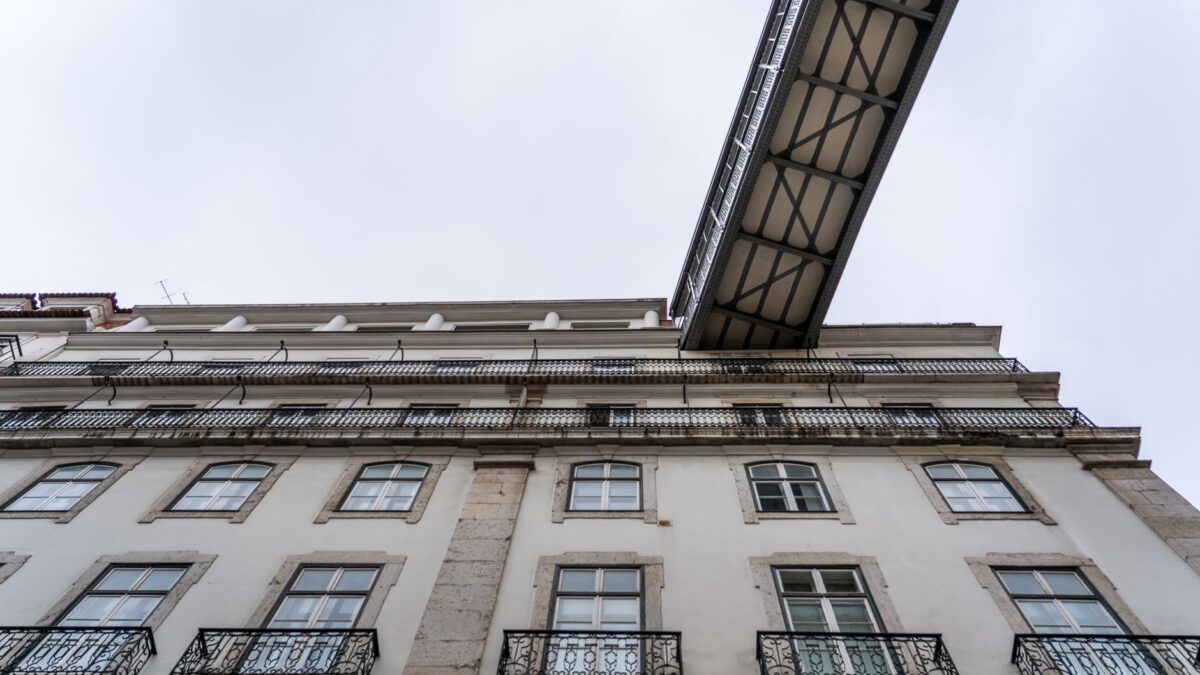
Any flat or house rented to tourists in Lisbon for stays under 30 days needs a local lodging (alojamento local, AL) registration number from Lisbon City Council (Câmara Municipal de Lisboa), and the number must appear in every listing. Since 6 December 2025, the city bans new registrations in areas where AL units reach 10% of permanent homes, with narrow exceptions.
Two sets of rules apply as of November 2026: the national AL law (Decreto-Lei 128/2014, as amended by Decreto-Lei 76/2024) and Lisbon’s Municipal Local Lodging Regulation (Regulamento Municipal do Alojamento Local, RMAL), last amended by Aviso 29926-A/2025/2. This page explains them for hosts and for the neighbors who live next door.
When does renting a flat count as alojamento local?
The law presumes a property is used as AL when it is advertised as accommodation for tourists or temporary stays, or when it is furnished and offered to the public with extras such as cleaning for periods under 30 days. A registered residential lease (contrato de arrendamento) filed with the tax office rebuts that presumption. Renting a room to a student for a semester on a proper lease is therefore not AL; listing the same room by the night is.
AL comes in several types: houses (moradia), apartments, rooms (quartos) in the host’s own home, guesthouses and hostels. A hostel cannot open in a building divided into separately owned units (propriedade horizontal) that also has homes unless the owners authorize it.
How do I register a short-term rental in Lisbon?
Registration is a prior notice with a deadline (comunicação prévia com prazo) filed online. The steps:
- Check that the property has a usage licence compatible with AL and that the area is not in absolute containment (see below).
- File the notice only through the Balcão Único Eletrónico, the government’s online one-stop shop on ePortugal, addressed to the mayor of Lisbon, with the documents the law lists: the operator’s ID, a signed statement that the property is fit and legal for lodging, the property tax record (caderneta predial) if you own it, or the lease with the owner’s written permission for lodging if you rent it, and proof that you opened the matching activity with the tax office.
- Wait for the council’s decision. The mayor can object within 60 days, or 90 days in containment areas, for example for missing documents or because the area is closed to new AL.
- If there is no objection, the portal issues the registration number. That document is the only valid title to open to the public.
- Take out the mandatory insurance, set up the information book and safety equipment, and register for the tourist tax within 30 days of starting.
You also need a NIF and must declare the income for tax purposes. Ask a contabilista certificado (certified accountant) how AL income is taxed in your case.
Where are new AL registrations blocked in Lisbon?
New registrations are not allowed in areas of absolute containment, and need exceptional council approval in areas of relative containment. Since the December 2025 amendment, the city measures the ratio of AL units to permanent homes at three levels (whole city, parish and neighborhood) and checks it monthly using INE data.
| Level | Ratio of AL to permanent homes | New registrations |
|---|---|---|
| Absolute containment | 10% or more | Banned, except for rehabilitation of ruined buildings or buildings empty for over 3 years that the council treats as of special interest (for example with social, cultural or affordable-housing uses) |
| Relative containment (parishes or neighborhoods) | 5% to under 10% | Only with exceptional approval; also possible for up to 1 room in a two-bedroom (T2) home, or 2 rooms in a larger one, that has been the host’s permanent and tax residence for over 3 years |
When the amendment came in, the parishes of Santa Maria Maior, Misericórdia, Santo António, São Vicente, Arroios and Estrela were classed as absolute containment and Avenidas Novas as relative containment, along with individual neighborhoods elsewhere. Areas are reviewed every two years and can be updated by the council in between, so check the current map with the council before buying or renting a property for AL.
Exceptional approvals last 5 years and are not renewed while the area stays in containment; room approvals last one year and can be renewed. No exception is granted for a unit that had a residential lease in the previous five years (except where the tenant is the one applying). In containment areas, selling or transferring an apartment or house registration generally makes it lapse, so a buyer has to apply again under the current rules.
Can the building’s owners stop an AL unit?
Yes, in two ways, both set out in the national law:
- Before it opens: the condominium can change its rules to ban AL in the building by a vote representing two-thirds of the building’s permillage (permilagem, the ownership share of each unit). The ban only applies to registrations requested after the vote.
- After it opens: the owners’ meeting can oppose a specific unit by a reasoned resolution approved by more than half of the permillage, based on repeated, proven acts that disturb normal use of the building or the residents’ rest. The resolution goes to the mayor, who decides.
The mayor may first invite the parties to reach an agreement, with a local lodging ombudsman (provedor do alojamento local) where one exists; that process must end within 60 days. If the registration is cancelled for this reason, the property cannot be used as AL for a period set in the decision, up to five years.
What can I do about a noisy AL flat next door?
Start with the host, then escalate. Hosts in shared buildings must give the condominium a phone number and email address, and must post the quiet hours of the General Noise Regulation (Regulamento Geral do Ruído) inside the unit.
- Call the host’s contact number during the incident. Owners can vote by simple majority of the capital to require a permanent emergency phone line.
- For noise at night, call the PSP (Portugal’s public security police) or the Polícia Municipal de Lisboa (the city police).
- Keep a record: dates, times, police report numbers and messages. The law requires repeated and proven disturbance.
- Raise it at the condominium meeting and, if needed, pass the resolution described above.
- Check the registration number on Turismo de Portugal’s public AL register (RNAL). If the unit has none, report it to the council or to ASAE (Portugal’s economic and food safety authority), which enforces the AL law together with the council.
For emergencies such as fire or violence, call 112. Our guide to emergency numbers in Portugal lists the other lines.
What else must an AL host do?
Hosts must keep insurance in force, a complaints book (livro de reclamações), and an information book in Portuguese, English and at least two other languages covering waste sorting, appliances, noise and building rules. Units for up to 10 guests need a fire extinguisher, fire blanket, first-aid kit and the 112 number on display. Guests pay the city’s Lisbon tourist tax of €4 a night through the host. A host who puts the property on a residential lease can suspend AL operation for up to five years by notifying the council.
Bottom line
A Lisbon listing without a registration number is illegal, and the central parishes are effectively closed to new units. Neighbors have more leverage than many think: a majority vote by permillage, backed by police records, puts the decision in the mayor’s hands.
FAQ
Can I rent my room on a short-term platform while I live in the flat?
Only with an AL registration in the “room” type. In relative containment areas Lisbon allows this by exception if the home has been your permanent and tax residence for over 3 years; in absolute containment areas it is generally not allowed.
Does my landlord need my permission to run AL in my rented flat?
Yes. A tenant who applies must attach the lease and, if the lease does not already allow lodging services, a separate written authorization from the owner. See our guide to renting an apartment in Lisbon for lease basics.
Is AL registration permanent?
No. The council can cancel it for false information, missing insurance, breaking the operating rules or repeated disturbance, and in containment areas a transfer can make it lapse.