Azulejo Spots in Lisbon: 16 Tile Museums, Churches and Facades
Where to see azulejos in Lisbon: the National Tile Museum, Fronteira Palace, Igreja da Graça, tiled shopfronts and street panels, with hours and tickets.
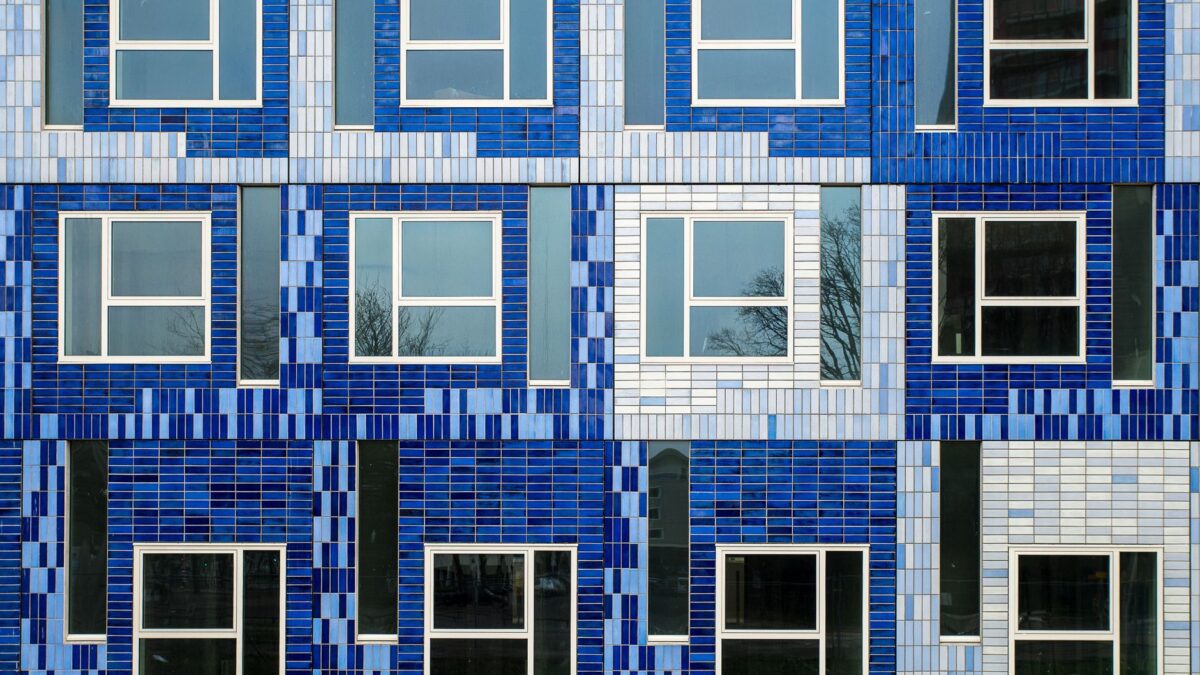
The best single stop for azulejos (Portugal’s painted ceramic tiles) in Lisbon is the Museu Nacional do Azulejo, the national tile museum, whose collection runs from the 15th century to today. Outside the museum you can see tiles in a 17th-century palace, old churches, a beer hall, a fado house, shopfronts, whole streets in Lapa and modern public panels from Avenida Infante Santo to Parque das Nações. Most of the stops below come from the Visit Lisboa azulejo route and are grouped by area.
Museu Nacional do Azulejo, Madre de Deus
The museum occupies the former Madre de Deus Convent, which Queen D. Leonor founded in 1509. The permanent exhibition opens with a small section on materials and how tiles are made, then follows azulejo production through the centuries. Its best-known piece is the Panorama, a long tile panel showing Lisbon as a panoramic view. The convent church of Madre de Deus is part of the visit, with gilded carved wood, paintings and more tile panels in full Portuguese baroque style.
Address: Rua da Madre de Deus, 4, 1900-312 Lisboa. Hours: Tuesday to Sunday; the museum’s Visit Lisboa page lists 10:00 to 18:00 with last entry at 17:15, while the azulejo route gives 10:00 am to 1:00 pm and 2:00 pm to 6:00 pm, so check before you go. Closed Mondays, January 1st, Easter Sunday, May 1st, June 13th and December 25th. Tickets: €5 standard; 50% off for visitors 65 years +, Youth Card holders and family tickets. Getting there: Metro Blue Line; buses 759, 794, 718, 742, 781, 782.
Viúva Lamego, Intendente
Built between 1849 and 1865, this former pottery workshop and tile factory has a facade covered in figurative tiles by the factory’s artistic director, known as “Ferreira das Tabuletas.” António Costa Lamego ran the workshop, and the business took the name Viúva Lamego (Lamego’s widow) when his wife took charge after his death in 1876. The building is classified as public interest property.
Address: Largo do Intendente, 25, 1100-285, Lisboa. Hours: Monday to Friday, 10:00 am to 6:30 pm, closed at lunch. Getting there: Metro Green Line; bus 708.
Igreja da Graça, Graça
Founded in 1291 on Largo da Graça, this church was altered many times, especially after the 1755 earthquake, and mixes Baroque and Manueline elements. Inside, look for tiles from the 16th, 17th and 18th centuries, Rococo altars and the baroque sacristy with its allegorical ceiling. It has been a National Monument since 1910, and the terrace has a view over the Tagus River.
Hours: the Igreja da Graça page listed opening hours of 09:00 to 19:00; confirm on the day you go.
Cervejaria Trindade, Chiado
Manuel Moreira Garcia bought the Convento da Santíssima Trindade in 1835, set up a beer factory there and opened the beer hall the following year. In 1863 he commissioned allegorical panels of the four elements and the four seasons from Luís Ferreira of the Viúva Lamego factory. The 20th-century stone mosaic walls are by Maria Keil.
Address: Rua Nova da Trindade, 20C, 1200-466 Lisboa. Hours: daily, 11:00 am to 12:00 am. Getting there: Metro Green Line.
Adega Machado, Bairro Alto
This fado house is known for the yellow tile panel by Thomaz de Mello on its facade, dated 1937. Amália sang here, as did members of the Machado family.
Address: Rua do Norte, 91, 1200-283 Lisboa. Hours: daily, 7:00 pm to 2:00 am. Getting there: Metro Green Line; trams 12E, 15E, 24E.
Casa dos Parafusos, Rua da Boavista
The facade of this shop, open for over a hundred years, spells the word “parafusos” (screws) with realistic drawings of screws, nuts and washers. The Art Deco-style tiles are blue and carmine on an amber background and were made by the Companhia da Fábrica Cerâmica Lusitânia in the 1920s. The city’s Divisão de Salvaguarda do Património Cultural (Cultural Heritage Safeguarding Division) restored the facade after years of decay.
Address: Rua da Boavista, 84, 1200-067 Lisboa. Getting there: Metro Green Line or Blue Line; trams 12E, 15E, 28E.
Galeria Ratton, Príncipe Real
Galeria Ratton shows contemporary art made with tiles, including panels and installations that push the medium in experimental directions.
Address: Rua da Academia das Ciências, 2C, 1200-004, Lisboa. Hours: Tuesday to Saturday, 11:00 am to 7:00 pm. Tickets: free entry. Getting there: trams 24E, 28E, 12E.
Igreja de São Roque, Bairro Alto
São Roque was the first church of the Society of Jesus in Portugal, built from the end of the 16th century, and it is on the azulejo route. The attached São Roque Museum holds Portuguese religious art from the 16th to 18th centuries, including painting, sculpture, jewelry and manuscripts, and runs guided visits of the church and museum. Its listed hours of 10:00 to 18:00 were marked as a seasonal schedule, so confirm the current times.
Rua do Sacramento à Lapa and Rua de São Domingos à Lapa
Two Lapa streets work as an open-air tile walk. On Rua de São Domingos à Lapa, facades carry floral, Hispano-Arabic and stamped tiles. On Rua do Sacramento à Lapa, look for the Palacete do Visconde de Sacavém, a late 19th-century noble house whose neo-Manueline windows are covered in tiles and embossed ceramics, likely from the Fábrica de Campolide.
Getting there: trams 15E, 18E; train to Cais do Sodré – Cascais line.
“O Mar,” Avenida Infante Santo
Maria Keil designed this panel of the sea, with shells, boats and a fisherman at the center, as part of a 1950s movement to bring tiles into public art. Viúva Lamego produced it in 1959. What you see today is a replica from 2005, because the damaged original went into storage at the Museu da Cidade. Five other tile works line the same avenue.
Address: Av. Infante Santo 70, 1350-180 Lisboa. Getting there: trams 15E, 18E, 28E.
Chafariz da Cordoaria, Rua da Junqueira
This fountain was built between 1821 and 1828, but its tile panels, made at Viúva Lamego and executed by Mário Reis, were added in the 20th century during a repair project by architect Raul Lino. The panels have bird designs at their center.
Address: Rua da Junqueira, Lisboa. Getting there: tram 15E; buses 728, 732.
Sant’Anna tile factory, Calçada da Boa Hora
Founded in 1741 as a pottery that mostly made unglazed red clay crockery, the factory turned to tiles when Lisbon needed large quantities to rebuild after the 1755 earthquake. Many of those tiles are still on downtown buildings, and the workshop still uses traditional techniques.
Address: Calçada Boa Hora, nº 96, 1300-488, Lisboa. Hours: Monday to Friday, 9:30 am to 6:30 pm, by appointment. Tickets: free entry. Getting there: tram 15E; buses 732, 76.
Palácio de Fronteira, Benfica
This 17th-century palace sits near an entrance to Monsanto park, away from the center. It has baroque gardens with fountains, lakes and statues, plus a well-preserved set of 17th-century tiles. Inside, the Sala dos Painéis Holandeses (Dutch Panel Room), the gallery of Liberal Arts and the Sala das Batalhas (Battle Room) tell the story of the marquises of Fronteira. The Fronteira Palace page gives no hours or prices, so check before you go.
Pastelaria Mexicana, Avenida Guerra Junqueiro
This patisserie opened in 1946 and was remodeled between 1961 and 1962 by modernist architect Jorge Ribeiro Ferreira Chaves. Its bas-relief ceramic panel “Sol Ardente da Mexicana” (1961) by Querubim Lapa became the café’s emblem, and the place is a monument of public interest. Another large modern work, João Abel Manta’s abstract tile cladding on Avenida Calouste Gulbenkian, is described on the second page of the azulejo route.
Address: Av. Guerra Junqueiro 30 C, 1000-167 Lisbon. Hours: Monday to Friday, 8:00 am to 7:00 pm; Saturday, 8:30 am to 7:00 pm. Getting there: Metro Green, Blue or Red Line.
Oceanário panel, Parque das Nações
The access ramps to the Oceanário have a 1998 panel of marine life by Ivan Chermayeff, made of 54,000 tiles from the Constância Ceramic Factory. He combined computer processing of image pixels with stamping, so the sea creatures come into focus as you step back. You can see the panel from the ramps; the prices below are for the aquarium.
Address: Esplanada Dom Carlos I s/n, 1990-005 Lisboa. Hours: daily, 10:00 am to 8:00 pm (last entry 7:00 pm). Tickets: free for ages 0-2, €15 for 3-12, €25 for 13-64, €17 for +65. Getting there: Metro Red Line; buses 760, 728.
Erró mural, Avenida Dom João II
Plastic artist Erró filled this public tile panel with characters from American comics and science fiction, Superman and Spider-Man among them, packed edge to edge.
Address: Av. Dom João II 47, 1990-095 Lisboa. Hours: open 24 hours. Getting there: Metro Red Line; bus 708.
Tips for visiting
- Plan by area: Lapa, Junqueira and Calçada da Boa Hora sit on the tram 15E side of the city; Chiado and Bairro Alto are close together; Parque das Nações is on the Metro Red Line.
- The national tile museum is closed on Mondays, and the Sant’Anna workshop needs an appointment.
- Many stops are facades and street panels you can see for free at any time.
- Combine the tile museum with other collections from our list of art museums in Lisbon, or keep it for a wet afternoon with our rainy day ideas.
Quick answers
How much is the National Tile Museum?
A standard ticket is €5, with 50% off for visitors 65 years +, Youth Card holders and family tickets.
Can I see azulejos for free in Lisbon?
Yes. Galeria Ratton and the Sant’Anna workshop list free entry, and the facades, street panels, fountain and the Erró mural are outdoors.
Where can I buy tiles to take home?
Sant’Anna and Viúva Lamego are working tile factories on the route; for souvenir shops and airport packing rules, see our guide to what to buy in Lisbon.
Checked against official sources in November 2026. Hours, prices and rules change: confirm on the official page before you go or apply.
Site editor: Nikita Sheikin