Baroque Lisbon: Palaces, Churches and Museums After the 1755 Earthquake
Baroque Lisbon spans palaces, churches and museums, many rebuilt after the 1755 earthquake. Addresses, hours and transport for each place.
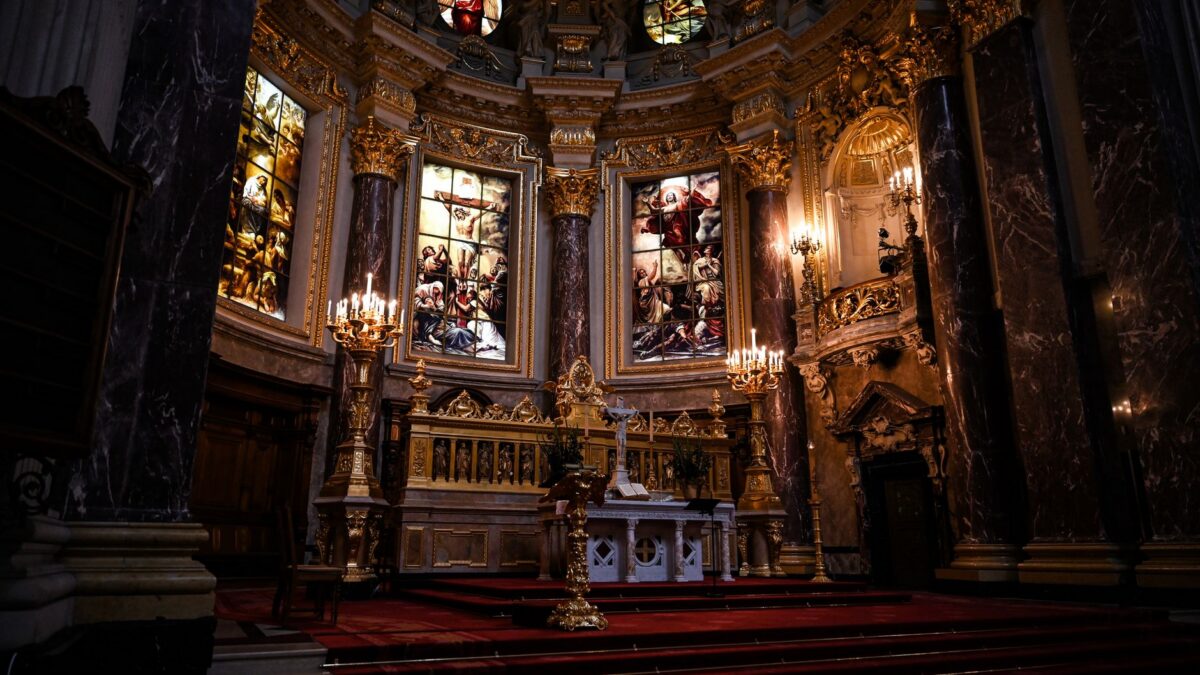
Baroque Lisbon is best seen at a handful of palaces, churches and museums: Palácio Fronteira in Benfica, the Basílica da Estrela, the churches of Alfama and Graça, the Museu Nacional do Azulejo and the Palácio Nacional de Mafra outside the city. The 1755 earthquake damaged or destroyed several of them, and some were rebuilt in the years after. Opening times below come from the Visit Lisboa Baroque Route, and the places are grouped by area.
Visit Lisboa describes Baroque style through its grandeur and drama: ornate stonework, gilded wood, azulejo (painted tile) panels and painted ceilings. The same pages list several churches that were repaired or restored after the earthquake. For more tile-focused stops, see the guide to azulejo spots in Lisbon.
What about the Pombaline rebuilding?
After the 1755 earthquake, the downtown Baixa was laid out again on a grid of straight streets under the Marquis of Pombal, which is why the style is called Pombaline. The places below sit mostly outside that grid, in Alfama, Graça, Estrela, Benfica and Belém. They show the Baroque that survived, was repaired or was built alongside the new downtown. The earthquake destroyed one of the bell towers of the church at Largo de Santo Estêvão in Alfama.
Palácio Ludovice, Bairro Alto
Visit Lisboa describes this 18th-century palace as one with a balanced facade, cornices and crafted windows. Inside there are decorated ceilings and azulejo panels.
Address: R. de São Pedro de Alcântara 39. Getting there: Bus 18B, or Metro Blue Line (Restauradores) or Yellow Line (Rato). Website: palacioludovice.com. Hours are not listed on the route page, so check the website.
Igreja de São Miguel, Alfama
The church dates from the 12th century. It was rebuilt between 1673 and 1720 and, because of damage from the 1755 earthquake, quickly restored. It has a symmetrical facade with 2 bell towers, paintings by José Ferreira de Araújo and 16 canvases in gilded wood frames.
Address: Largo de São Miguel. Hours: Monday to Saturday 10am to 6pm, Sunday 8am to 10am. Getting there: Tram 28E, bus 737, or Metro Blue Line (Santa Apolónia and Terreiro do Paço).
Igreja de Santo Estêvão, Alfama
The church has a rectangular plan with cut corners. It was rebuilt in Baroque style in 1733, and the earthquake of 1755 destroyed one of its bell towers, which cost the building its symmetry. It was restored again in the 1830s, according to the second page of the route.
Address: Largo de Santo Estêvão. Hours: Tuesday and Thursday 4pm to 6pm, Saturday 4pm to 6pm, Sunday 10am to 12.30pm. Getting there: Tram 28E, or Metro Blue Line (Santa Apolónia).
Igreja da Graça, Graça
Visit Lisboa calls this church one of the most beautiful in Lisbon and says it has one of the best views over the city. It dates from the 13th century and was changed several times, including after the 1755 earthquake. Baroque and Manueline styles still sit side by side. The azulejos, the Rococo gilded woodwork and the 18th-century sculptures are its main features. A visit pairs well with the churches in the guide to churches and monasteries in Lisbon.
Address: Largo da Graça 94. Hours: Every day 9am to 7pm. Getting there: Tram 28E, bus 712 or 10B, or Metro Green Line (Martim Moniz).
Mosteiro de São Vicente de Fora, São Vicente
The monastery mixes Gothic and Baroque, and inside there is a collection of 38 azulejo panels, each showing a fable by La Fontaine.
Address: Largo de São Vicente. Hours: Every day 10am to 6pm, last entry 5pm. Getting there: Tram 28E, bus 737, Metro Blue Line (Santa Apolónia) or Green Line (Martim Moniz), or the Azambuja Line train to Santa Apolónia. Website: mosteirodesaovicentedefora.com.
Museu Nacional do Azulejo, Madre de Deus
The museum is in a former convent of the nuns of the Order of Santa Clara. According to Visit Lisboa, the convent was built and decorated in stages from the early 16th century to the middle of the 18th, and it is one of the best examples of Baroque architecture and art in Portugal, with very elaborate gilded woodwork and azulejos.
Address: Rua da Madre de Deus 4-B. Hours: Tuesday to Sunday 10am to 1pm and 2pm to 6pm. Closed Jan. 1, Easter Sunday, May 1, June 13 and Dec. 25. Getting there: Bus 718, 728, 742, 759 or 794, or Metro Blue Line (Santa Apolónia).
Museu Nacional de Arte Antiga, Santos
The museum is in a palace commissioned in the 17th century by D. Francisco of Távora after he returned from India, where he had been viceroy. The state bought it in 1883. The long facade is broken only by portals with a lively Baroque design, and inside there are painted ceilings and rocaille stucco. For more of the same kind of collection, see the history and archaeology museums in Lisbon.
Address: Rua das Janelas Verdes. Hours: Tuesday to Sunday 10am to 6pm. Closed Mondays, Jan. 1, Easter Sunday, May 1, June 13 and Dec. 25. Getting there: Tram 15E, 18E or 25E, or bus 713, 714, 727, 728, 732 or 760.
Basílica da Estrela, Estrela
According to Visit Lisboa, the neoclassical 18th-century church is a simplified replica of the Convento de Mafra and the result of a vow the queen made hoping for a son and heir. Its white dome marks the skyline. Inside there are paintings by Pompeu Botoni and Pedro Alexandrino, marble in many colors, the queen’s tomb and a nativity scene made of 500 cork and terracotta pieces. It is also a stop on the tram 28 route.
Palácio Fronteira, Benfica
The palace is built in the Mannerist style with Baroque decoration, and Visit Lisboa says it has baroque gardens with fountains, lakes and statues, and a set of rocaille decorations and 17th-century azulejos. Rooms to ask about include the Sala dos Painéis Holandeses (Dutch Panel Room) and the Sala das Batalhas (Battle Room). It stands near one of the entrances to Monsanto.
Address: Largo São Domingos de Benfica 1. Guided visits: Monday to Saturday and public holidays. English tours at 10am, 11.30am, 1pm, 2.30pm and 4pm. Gardens: 10am to 6pm, last entry 5.30pm. Getting there: Train to Sete Rios, bus 770, or Metro Blue Line (Zoo). Website: fronteira-alorna.pt. Another option in the same area is covered in the guide to palaces near Lisbon.
Palácio Nacional de Mafra, Mafra
Visit Lisboa calls this the most important monument of the Portuguese Baroque period. Its area of 38,000 m2 makes it one of the largest in Europe, with a symmetrical facade, columns and sculptures outside, and colored marble and frescoes inside.
Address: Terreiro D. João V, Mafra. Hours: Wednesday to Monday 9.30am to 5.30pm. Getting there: Bus 2740, 2741, 2803 or 2804 from the Campo Grande terminal. Website: palaciomafra.pt.
Tips for visiting
Hours vary widely: the Alfama churches open for short periods, and the museums close on set days. Check the website of each place before going. Tram 28E reaches Santo Estêvão, São Miguel, Graça and São Vicente, so they can be combined in one day. Mafra is a separate trip. If you are visiting in the cold months, the guide to things to do in Lisbon in winter lists more indoor stops.
Before you go
The official pages to check are the Visit Lisboa route pages linked above and the website of each place. Hours, closing days and guided-tour times are what change most often.
Facts from the official pages linked above, as of November 2026.
Site editor: Nikita Sheikin