Driving in Portugal: Speed Limits, Alcohol Limits and Fines
The Highway Code sets the limits, the fines and the 12-point licence. What drivers in Lisbon need to know about speed, alcohol, phones, roundabouts and paying a fine.
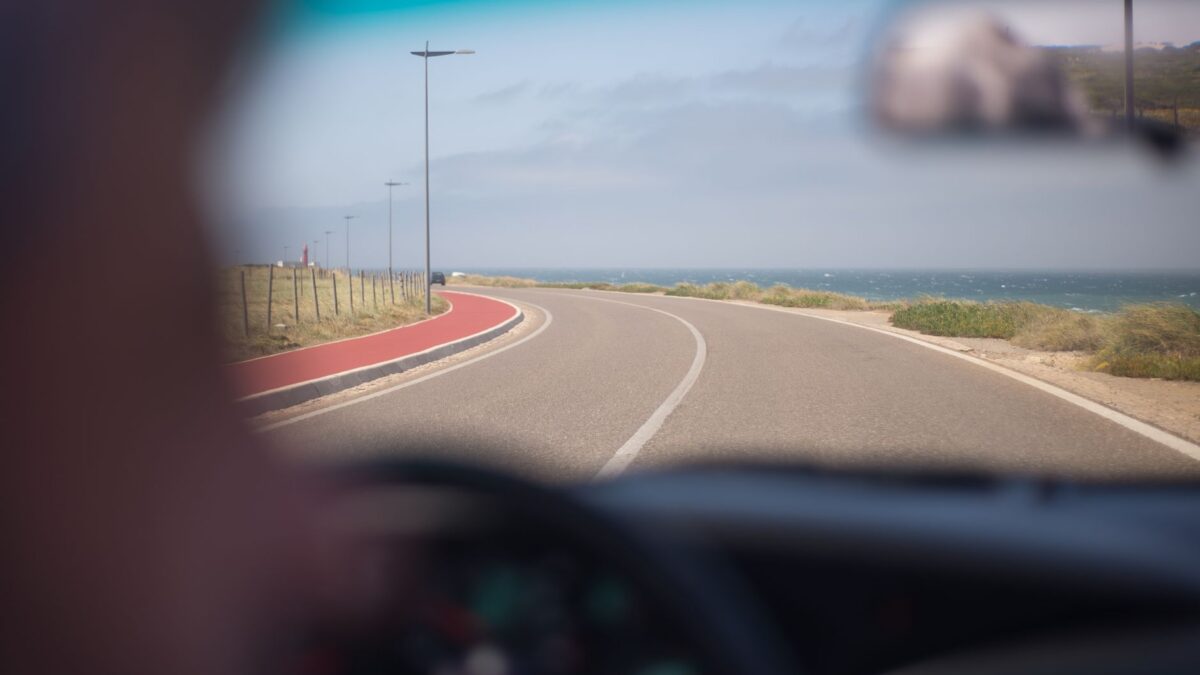
In Portugal, cars may drive at up to 50 km/h in towns, 90 km/h on other roads outside towns, 100 km/h on roads reserved for motor vehicles and 120 km/h on motorways. The blood-alcohol limit is 0.5 g/l, or 0.2 g/l for new drivers and professional drivers. Every licence holder starts with 12 points.
The rules come from the Highway Code (Código da Estrada) and are enforced by the PSP (Portugal’s public security police) in cities and the GNR (the national republican guard) on most other roads. Fines are processed by ANSR (Autoridade Nacional de Segurança Rodoviária, the national road safety authority). Amounts below are as of November 2026.
What are the speed limits in Portugal?
For cars and motorcycles without a trailer, the general limits under article 27 of the Highway Code are:
| Road (as of November 2026) | Cars and motorcycles |
|---|---|
| Inside towns and cities (localidades) | 50 km/h |
| Outside towns, ordinary roads | 90 km/h |
| Roads reserved for cars and motorcycles (vias reservadas) | 100 km/h |
| Motorways (autoestradas) | 120 km/h, and at least 50 km/h |
Signs can set lower limits on any street, so the sign in front of you wins. Vans, vehicles towing a trailer and heavy vehicles have lower limits. Average-speed cameras count too: covering a stretch faster than the limit allows is treated as speeding.
Speeding fines for cars rise in four steps. Up to 20 km/h over the limit in town (30 km/h outside) costs €60 to €300. The next steps are €120 to €600, €300 to €1,500 and, at more than 60 km/h over in town or 80 km/h outside, €500 to €2,500.
What is the alcohol limit, and what are the penalties?
You are under the influence at 0.5 g/l of alcohol in the blood or more (article 81). The limit is 0.2 g/l for drivers in their probation period and for drivers of emergency vehicles, school transport, taxis, ride-hailing cars (TVDE), heavy vehicles and dangerous goods.
| Blood alcohol (standard drivers) | Classification | Fine (as of November 2026) |
|---|---|---|
| 0.5 to under 0.8 g/l | Serious (grave) | €250 to €1,250 |
| 0.8 to under 1.2 g/l | Very serious (muito grave) | €500 to €2,500 |
| 1.2 g/l or more | Crime under the Penal Code | Court case, criminal penalty and driving ban |
For new and professional drivers, the lower thresholds drop to 0.2 and 0.5 g/l. Serious offences also carry a driving ban of 1 month to 1 year, and very serious ones 2 months to 2 years.
Can I use my phone while driving?
No, not handheld. Article 84 forbids using or handling any device that can impair driving, including phones and headphones, while the car is moving. A single earpiece or a hands-free system that does not need continuous handling is allowed. The fine is €250 to €1,250, and it is a serious offence that costs 3 points.
Radar detectors and jammers are banned outright, with fines of €500 to €2,500 and confiscation.
What safety equipment must I carry?
Every car must carry a reflective warning triangle and a reflective vest, both of an approved model (article 88). The fine is €60 to €300 for each missing item.
- If you stop on the road or hard shoulder, put on the vest before leaving the car.
- Place the triangle at least 30 m behind the car, where it can be seen from 100 m away.
- Switch on the hazard lights. Not using the triangle when required costs €120 to €600.
Seat belts are compulsory for everyone in the car, and riders of e-scooters and motorized bikes must wear a helmet (article 82).
How do roundabouts work in Portugal?
Give way to traffic already on the roundabout, from whatever lane it comes (article 14-A). If you take the first exit, use the right-hand lane. For any later exit, stay in an inner lane and move to the right-hand lane only after passing the exit before yours. Breaking these lane rules costs €60 to €300. Heavy vehicles and cyclists may stay in the right lane but must let others exit.
How does the points licence work?
Every driver starts with 12 points (carta por pontos), in force since 1 June 2016. Points are taken off only once a fine or conviction is final, according to ANSR’s points licence page:
| Offence (as of November 2026) | Points lost |
|---|---|
| Serious: alcohol, speeding, overtaking at crossings, phone use | 3 |
| Other serious offences | 2 |
| Very serious: alcohol or drugs, speeding in shared-space zones | 5 |
| Other very serious offences | 4 |
| Road crimes | 6 |
At 5 or 4 points you must take a road safety course; at 3 to 1 points, the theory exam again. At 0 the licence is cancelled and you must wait 2 years to get a new one. Three years without serious offences earns 3 points, up to 15. New drivers are on probation for 3 years, and one road crime, one very serious offence or two serious offences in that time cancels the licence.
If you are swapping a foreign licence, see our guide to exchanging a driving licence in Portugal.
How do I pay a traffic fine?
Use ANSR’s online portal for traffic offences (Portal das Contraordenações), where you can register, see notices and your points balance, and pay. The notice states the amount and the deadline. Points come off your licence once the decision is final.
Parking in Lisbon is a separate system run by EMEL, the city’s parking company; see our guide to EMEL parking. For motorway tolls and the Via Verde system, see our tolls guide.
Bottom line
The penalties that hurt most are the ones with points and driving bans, not the fines themselves: two serious offences in your first three years end a new licence. The 0.2 g/l limit for probationary and professional drivers means a single drink can be over it.
FAQ
Can I drive in Portugal with a foreign licence?
Visitors usually can for a limited time, depending on the country that issued the licence. Residents must exchange certain licences within set deadlines; check with IMT, the transport institute.
Is running a red light a serious offence?
Yes. Failing to stop at a red traffic light is listed by ANSR as a very serious offence, which costs 4 points and can bring a driving ban of 2 months to 2 years.
How long is the probation period for new drivers?
Three years from getting a first licence. During that time the alcohol limit is 0.2 g/l, and one very serious offence, two serious ones or a road crime cancel the licence.
Where can I check my points?
On ANSR’s Portal das Contraordenações, after registering and logging in.