Lisbon-Porto High-Speed Rail: Route, Stations and Opening Dates
The Lisbon-Porto high-speed line is 290 km long, with a 75-minute trip planned and sections opening from 2030 to after 2032. Route, stations and dates.
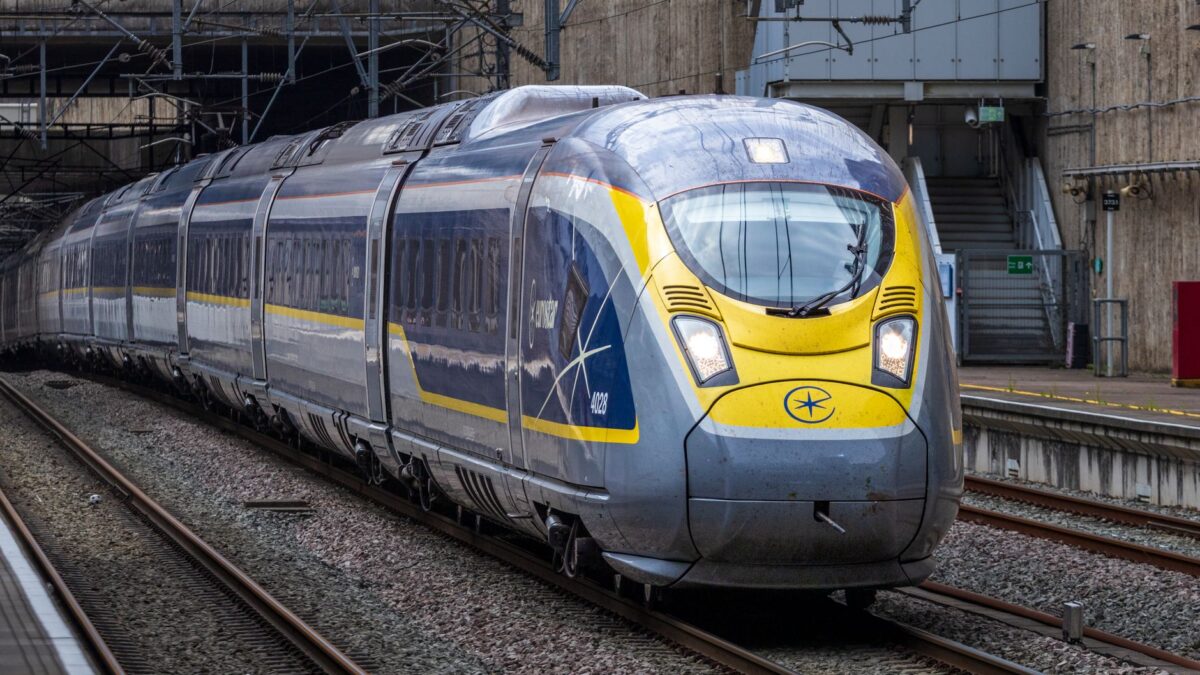
The new Lisbon-Porto high-speed line is a 290 km double-track railway that is now under construction, with a planned top speed of 300 km/h. Work on the first phase began on Oct. 12, 2026, and the last section is not due before 2032 ends. The line will carry Comboios de Portugal (CP, the national rail operator) trains between Lisboa-Oriente and Porto-Campanhã.
What route will the line follow?
The line is meant to link Lisbon with Porto, Portugal’s second-largest city, on Iberian gauge with overhead electrification. According to the Wikipedia article on the Porto to Lisbon line, the termini are Lisboa-Oriente and Porto-Campanhã. Between Porto and Gaia, a new bridge will cross the Douro river.
A separate plan would connect Porto to Vigo in Spain, leaving Porto-Campanhã and passing through Francisco Sá Carneiro Airport and Braga. That link is less concrete and is expected to be finished only after 2030.
Which stations are planned?
Four intermediate stops are listed: Leiria, Coimbra, Aveiro and Gaia-Santo Ovídio in Vila Nova de Gaia. In most of these cities the existing station will be expanded to take the high-speed trains. Vila Nova de Gaia is the exception, because a new station called Gaia-Santo Ovídio will be built.
How long will the trip take?
The planned journey is 75 minutes without stops and 105 minutes with stops. The fastest service today takes 2 hours and 49 minutes, according to the Wikipedia article on high-speed rail in Portugal. That article also quotes the 1 hour and 15 minutes planned for the new line.
The gain comes from speed. The Alfa Pendular tilting trains run at up to 220 km/h on the existing Linha do Norte, while the new line is designed for 300 km/h.
When will each section open?
The project is split into three phases:
- Porto to Oiã (Oliveira do Bairro): planned to be complete by 2030. Construction of this phase started on Oct. 12, 2026.
- Oiã to Carregado: projected to be finished by 2032.
- Carregado to Lisbon, a small section: planned to be complete only after 2032.
For the whole line, the opening is listed as after 2032. Older announcements gave different dates, so treat any single year with caution. One earlier description of the first phase runs from Porto to Soure, due by 2028. The current phase plan ends the first phase at Oiã in 2030.
How much will it cost?
The sources give two figures. One puts the project at €4.5 billion. The other expects €4.9 billion by 2030, of which €1 billion comes from the European Union. Both figures come from secondary summaries, so check the latest budget with the infrastructure manager.
The money sits inside a larger plan. In 2020 the Portuguese government reactivated high-speed rail as part of an initiative to invest €43 billion in infrastructure projects by the 2030s.
Why did it take so long?
High-speed rail was planned in the 1990s and formally announced in 2005. That plan included Lisbon to Madrid, Lisbon to Porto and Porto to Vigo. It was cancelled in 2009 because of the economic downturn. In 2009 a consortium called ELOS won a 40-year contract for a 165 km section from Poceirão to the Spanish border at Caia, but the project was later terminated after a court battle.
Trains for the new line are a separate matter. For the rolling stock bid, see our report on Alstom’s pitch to build CP’s high-speed trains in Matosinhos.
What can you ride between Lisbon and Porto today?
Trains run hourly between the two cities, most of them Alfa Pendular. The fastest has only three intermediate stops: Coimbra, Aveiro and Vila Nova de Gaia. Other Alfa Pendular and some InterCity services call at 6 to 9 intermediate stops.
The Alfa Pendular cut the Porto to Lisbon journey by about 30 minutes compared with ordinary trains. Some services continue north to Guimarães and Braga, and others go south to Faro. For other transport changes in the capital, read about the Lisbon Metro elevator delays.
If something has changed
Dates and costs for this project have moved before, and the figures above come from summaries of official presentations. Check the Infraestruturas de Portugal page on the Porto to Lisbon high-speed line and CP’s timetable pages for the current phase dates, station names and any ticketing details. Opening years, cost figures and the exact end point of each phase are the details most likely to be revised.
Facts from the official pages linked above, as of November 2026.
Site editor: Nikita Sheikin