African Lisbon: 12 Places, Restaurants and Heritage Sites
Restaurants, a nightclub, a neighbourhood tour and old squares make up African Lisbon. See 12 places with addresses, hours and how to get there.
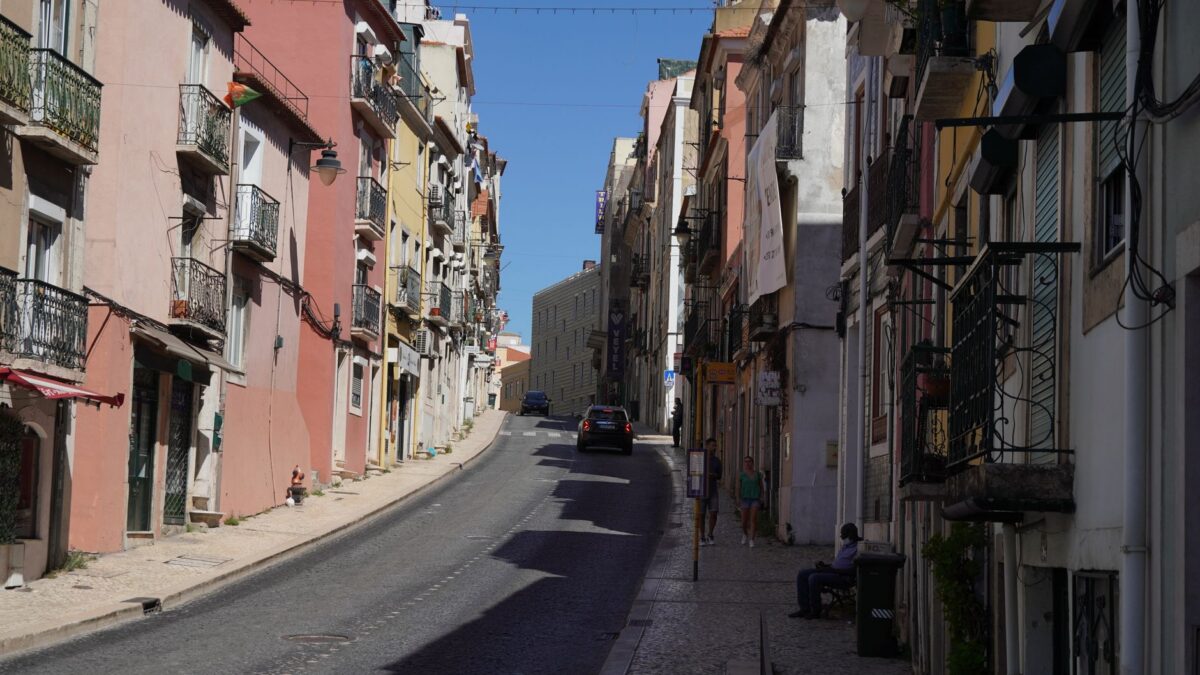
African heritage in Lisbon shows up in kitchens, dance floors, community centres and a few squares with a hard past. The city’s tourism board, Visit Lisboa, lists a route of places linked to Cape Verde, Angola and Mozambique, plus churches and open spaces along the way. Below are 12 of them, with the practical details the official pages give.
Associação Caboverdeana, Rua Duque de Palmela
The Cape Verdean association runs a restaurant where the islands’ food takes centre stage. A different dish is proposed every day.
Address: Rua Duque de Palmela, 2 – 8º, 1250-098 Lisboa. Hours: every day at lunch time. Phone: +351 21 359 33 67. Getting there: Blue Line or Yellow Line on the metro; buses 13, 207, 706, 727, 746 and 753.
Casa de Angola
This is a food and cultural space that has served typical Angolan dishes since 1970.
Address: Travessa da Fábrica das Sedas, 7, 1250-096 Lisboa. Hours: Mon-Sat, 12:00pm-03:00pm. Phone: +351 965527397. Getting there: tram 24E, Yellow Line, or buses 207, 727, 738, 753, 758 and 774.
Casa Mocambo, Rua do Vale de Santo António
Casa Mocambo is a restaurant and art gallery. Its menu draws on Lisbon’s mixed culture, and the ground-floor Audio Visual Gallery is reserved for exhibitions. The name comes from the old Mocambo de Lisboa, once a name for the Madragoa neighbourhood. Mocambo also means refuge or small village.
Address: Rua do Vale de Santo António, 122A, 1170-378 Lisboa. Hours: Tue-Fri and Sun, 06:00pm-12:00am; Sat, 12:00pm-04:00pm and 06:00pm-12:00am. Phone: +351 912509906. Getting there: tram 15E or buses 13B, 712, 726 and 736.
Ibo Restaurante, Cais do Sodré
Ibo sits in a warehouse built at the start of the 20th century, facing the Tagus estuary. The kitchen mixes Portuguese cooking with Mozambican flavours.
Address: Compartimento 2, Cais do Sodré Armazem A, 1200-450 Lisboa. Hours: Tue-Fri, 12:30pm-03:00pm and 07:30pm-11:00pm; Sat, 12:30pm-03:00pm and 07:30pm-01:00am; Sun, 12:30pm-03:00pm. Phone: +351 961 332 024.
B.Leza, Cais Gás
B.Leza is a Luso-African nightclub tied mainly to the culture and community of Cape Verde. Live music and dance fill the programme, and Visit Lisboa names Kizomba, Funaná and Coladeira among the rhythms you will hear.
Address: Cais Gás, 1, 1200-161 Lisboa. Hours: Fri-Sat, 10:30pm-04:00am; Sun, 07:00pm-02:00am. Phone: +351 21 010 6837. Getting there: Blue Line or Green Line on the metro, tram 28E, buses 728, 732, 736 and 782, or the Cais do Sodré ferry terminal.
Centro Cultural Cabo Verde (CCCV), Rua de São Bento
The centre’s stated mission is to run activities that support the community’s socio-cultural development and build interest in interculturality.
Address: Rua de São Bento, 640, 1250-222 Lisboa. Hours: Mon-Fri, 10:00am-05:00pm. Phone: +351 21 018 7393.
Sabura, Alto da Cova da Moura
Sabura is a community project run by the Associação Cultural Moinho da Juventude. It lets visitors see the Alto da Cova da Moura neighbourhood, which is in Amadora, while supporting the local economy and the area’s cultural and artistic heritage. Visits are arranged by email or phone, so contact the project first.
Address: Alto da Cova da Moura, 2610-202 Lisboa. Phone: +351 21 490 1070. Getting there: Blue Line on the metro or buses 711, 746, 764 and 767.
Campo das Cebolas
A slave market once stood here, between Praça do Comércio and Santa Apolónia. The square was completely renovated on April 14, 2018, and is now a leisure area.
Address: Campo das Cebolas, Lisboa. Getting there: buses 736, 744-711 and 744-759, or the Terreiro do Paço and Cais do Sodré ferry terminals. It is an easy stop on a walk through the neighborhoods between Alfama and Cais do Sodré.
Campo dos Mártires da Pátria
This central site has had many uses. It was a slaughterhouse, a bullring, the home of Lisbon’s flea market and a vegetable market. Today it is a park with a garden and animals.
Address: Campo dos Mártires da Pátria, Lisboa. Getting there: Green Line on the metro or buses 723, 730, 753, 760 and 767.
Igreja e Convento da Graça
The church and convent stand in Largo da Graça, in the civil parish of São Vicente. Visit Lisboa dates both to the founding of the Portuguese nation in the 13th century, with rebuilding in the 16th century and restoration after the 1755 earthquake. The hill next to the castle gives a view over the city.
Address: Calçada da Graça, Lisboa. Getting there: buses 712, 726, 734 and 737.
Igreja de São Domingos, Rossio
The church stands between Rossio and Praça da Figueira. It was built in the 13th century on the order of D. Sancho II, and works, renovations, earthquakes and fires changed its medieval structure. National and royal ceremonies, from funerals to weddings, took place here. People convicted of heresy by the neighbouring Palácio da Inquisição were sent to the church before being publicly executed in Rossio.
Address: Lg. de São Domingos, 1150-320 Lisboa. Hours: Mon-Sat, 07:30am-07:00pm. Phone: +351 213428275. Getting there: buses 708, 711, 714, 732 and 736. For other sites with a long history, see these history and archaeology museums.
Mouraria
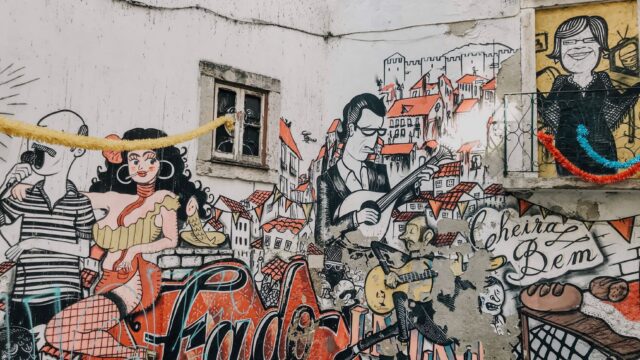
The Visit Lisboa page on Mouraria describes it as a traditional Lisbon quarter. After the Christian reconquest of Lisbon in 1147, this is where the Moors were allowed to live. Some scholars see it as the possible cradle of fado, and legend places the first great fado singer, Severa, here in the 1800s. If fado is on your list, the fado guide covers the museum and venues.
Tips for visiting
Several of the venues above open only at set times. Casa de Angola serves lunch Monday to Saturday, the Associação Caboverdeana serves lunch every day, and B.Leza opens late on Friday and Saturday, so plan the day around those hours. Sabura needs a booking by email or phone. Most addresses are on the Blue or Yellow metro lines, and Cais do Sodré has both the train and the ferries.
Before you go
Check the official Visit Lisboa pages and each venue’s own website or phone line before travelling. Opening hours, programmes and tour arrangements are the details most likely to change.
Facts from the official pages linked above, as of November 2026.
Site editor: Nikita Sheikin