European Portuguese Pronunciation Basics and 30 Useful Phrases
Portuguese as spoken in Lisbon sounds very different from how it looks on paper, and from Brazilian Portuguese. The sounds to learn first, the phrases you will use every day and where to study for free.
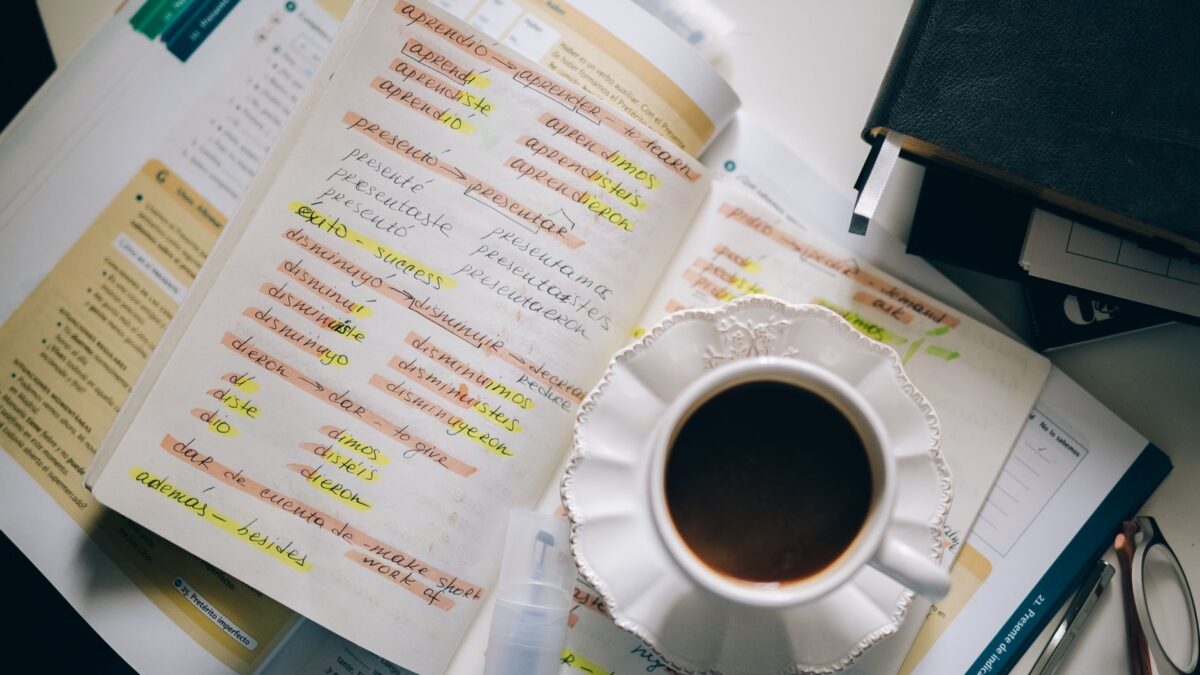
European Portuguese, the variety spoken in Lisbon, swallows most unstressed vowels, turns a final s into a “sh” sound and uses nasal vowels such as ão. Learning a dozen spelling rules makes street signs, Metro announcements and menus far easier to read aloud, and free Portuguese courses for immigrants (Português Língua de Acolhimento, PLA) are offered by public schools and IEFP training centers as of November 2026.
The pronunciation hints below use English sounds as rough guides. They describe standard Lisbon speech; accents vary across Portugal.
Why does Lisbon Portuguese sound so different from how it is written?
European Portuguese reduces or drops vowels that are not stressed, so words lose syllables in speech. Telefone (phone) sounds close to “tl-FON”, and Benfica close to “bayn-FEE-kuh”. Stress usually falls on the second-to-last syllable unless an accent mark shows otherwise.
Brazilian Portuguese keeps more of its vowels and sounds more open, which is why many learners find Brazilian speech easier to follow at first. The grammar and spelling are very close, and most vocabulary is shared, but everyday words differ: a bus is autocarro in Portugal and ônibus in Brazil, and a train is comboio in Portugal and trem in Brazil.
Which sounds should I learn first?
These letters and combinations cause most of the confusion for English speakers:
| Spelling | Sounds roughly like | Example |
|---|---|---|
| ão | “ow” in “now”, said through the nose | pão (bread), não (no) |
| õe, ões | “oy” through the nose, then “sh” for the plural | limões (lemons) |
| ç | “s” in “sun” | praça (square) |
| lh | “lli” in “million” | trabalho (work) |
| nh | “ny” in “canyon” | vinho (wine) |
| s at the end of a word, or before a consonant | “sh” | dois (two), Cascais |
| s between vowels | “z” | casa (house) |
| x | Usually “sh”; sometimes “z”, “s” or “ks” | baixa, exame |
| j, and g before e or i | “s” in “measure” | janela (window), gelo (ice) |
| r at the start of a word, or rr | A throaty sound, like French “r” | Rossio, carro (car) |
| h at the start | Silent | hoje (today) |
| e at the end of a word | Almost silent | leite (milk) |
Nasal vowels are also written with m or n after a vowel at the end of a syllable: bem (well), sim (yes), tempo (time). The m is not fully pronounced; the vowel goes through the nose.
How do I read Lisbon place names?
Applying the rules above, a few names newcomers meet in the first week:
- Cais do Sodré: “kysh doo soo-DREH”
- Chiado: “shee-AH-doo”
- Belém: “buh-LAYNG”, with a nasal ending
- Alfama: “al-FAH-muh”
- Restauradores: “resh-tow-ra-DOR-esh”
- Santa Apolónia: “SAN-ta a-poo-LO-nya”
Unstressed o usually sounds like “oo”, as in Rossio (“roo-SEE-oo”), which is why final -o words end in a short “oo”.
What are 30 useful everyday phrases?
These cover greetings, shops, cafés, transport and offices. Obrigado is said by men and obrigada by women.
| Portuguese | English |
|---|---|
| Bom dia / Boa tarde / Boa noite | Good morning / Good afternoon / Good evening |
| Olá | Hello |
| Obrigado / Obrigada | Thank you |
| Por favor | Please |
| Com licença | Excuse me (to pass) |
| Desculpe | Sorry / Excuse me |
| Sim / Não | Yes / No |
| Fala inglês? | Do you speak English? |
| Não percebo | I don’t understand |
| Pode repetir, mais devagar? | Can you repeat, more slowly? |
| Quanto custa? | How much is it? |
| A conta, por favor | The bill, please |
| Um café, por favor | An espresso, please |
| Uma água sem gás | A still water |
| Qual é o prato do dia? | What is the dish of the day? |
| Fatura com contribuinte, por favor | An invoice with my tax number, please |
| Posso pagar com cartão? | Can I pay by card? |
| Onde é a casa de banho? | Where is the toilet? |
| Onde fica a estação de metro? | Where is the Metro station? |
| Um bilhete para… | A ticket to… |
| A que horas parte? | What time does it leave? |
| À esquerda / À direita / Em frente | Left / Right / Straight ahead |
| Tenho uma marcação | I have an appointment |
| Quem é o último? | Who is last in line? |
| Preciso de ajuda | I need help |
| Chame uma ambulância | Call an ambulance |
| Estou à procura de casa | I’m looking for a place to live |
| Moro em… | I live in… |
| Como se diz… em português? | How do you say… in Portuguese? |
| Até logo / Até amanhã | See you later / See you tomorrow |
“Quem é o último?” is useful in pharmacies, markets and public offices without a ticket machine, where people keep track of the queue themselves. For ordering lunch, see our guide to the prato do dia.
Where can I learn Portuguese for free in Lisbon?
The main free option is the PLA program, Portuguese as a host language for people over 16 whose mother tongue is not Portuguese. According to AIMA’s page on PLA courses, they are offered free by public schools, IEFP (the public employment and training institute) centers, the Centros Qualifica network and associations, and certify levels A1 to A2 and B1 to B2.
- Ask at your nearest public secondary school, IEFP center or Centro Qualifica when the next course starts.
- Or email AIMA’s Portuguese language department ([email protected]) to find the nearest course to your home or work.
- Bring your identity document and, where asked, proof of residence or tax number.
- Check the timetable; many courses run in the evening for working adults.
Demand has grown fast, and some free courses have waiting lists of several months, depending on the area. Lisbon City Council also runs free Portuguese courses. Be cautious with paid certificates sold online: for official proof of level, use a PLA certificate or the CAPLE exams; see our guide to the CIPLE A2 exam.
Bottom line
Most newcomers understand far more once they stop reading every vowel and start hearing “sh” at the ends of words. Language proof also matters for permanent residence and, since Organic Law 1/2026, for nationality applications, which now test Portuguese language and culture, so a free course is worth starting early; our guide to citizenship requirements has the details.
FAQ
Should I learn European or Brazilian Portuguese if I live in Lisbon?
European Portuguese, because that is what you will hear at offices, shops and schools. Brazilian materials still help with grammar and vocabulary.
Do people in Lisbon speak English?
Many people in Lisbon, especially younger people and those in tourism, speak English. Public offices and older residents often do not, so basic Portuguese helps with daily errands.
Are PLA courses only for immigrants with residence permits?
The courses are for people over 16 whose mother tongue is not Portuguese. Entry rules on documents vary by provider, so ask the school or IEFP center.
How long does it take to reach A2?
It depends on the hours you study. PLA courses are organized by level, so ask the provider how many hours its A1 and A2 modules last.