1967 Lisbon Floods: Deaths, Causes and What Happened
The 1967 Lisbon floods killed about 700 people on Nov. 25-26 after heavy rain hit the Tagus Valley. Here is what happened and why it flooded so badly.
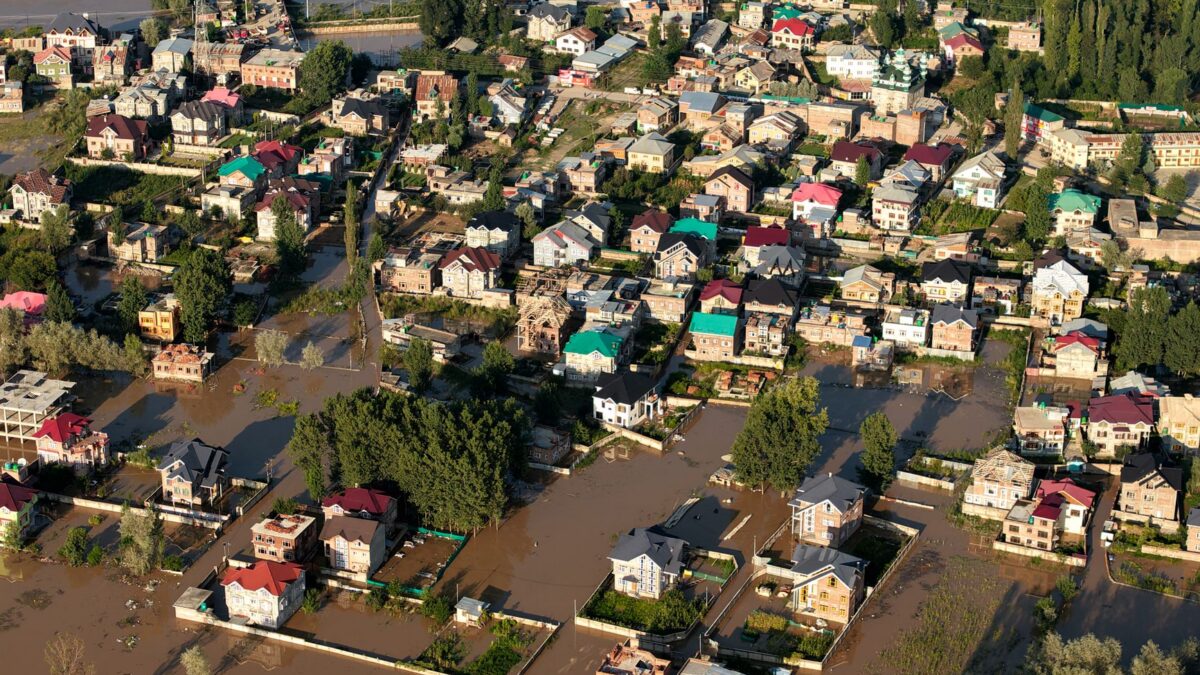
The floods of Nov. 25-26, 1967 killed about 700 people in the Lisbon region and destroyed about 20 thousand homes. Heavy rain fell overnight along the Tagus Valley, and small, fast-reacting river basins, blocked streams and undersized drains turned it into the worst disaster around the capital since the 1755 earthquake. The account below follows the Portuguese-language entry on Wikipédia, which cites university research, press archives and a municipal page.
What happened on the night of Nov. 25, 1967?
A weather depression crossed the whole Tagus Valley (Vale do Tejo) in the early hours of Nov. 25 to 26. Intense, concentrated rain flooded the entire Lisbon region. The worst-hit municipalities were Loures, Vila Franca de Xira and Arruda dos Vinhos.
Odivelas was then part of Loures. Three of its parishes at the time, Póvoa de Santo Adrião, Olival Basto and Odivelas, were also flooded. The deaths came with poor housing conditions and a lack of land-use planning, and the water destroyed houses, roads and bridges. Thousands of people were left without shelter.
How much rain fell?
The rain that night equaled about a fifth of the region’s annual rainfall. At the Gago Coutinho weather station in Lisbon, 115.6 mm fell in just 24 hours. At São Julião do Tojal, in the municipality of Loures, the station recorded 111 mm in only five hours, between 7 p.m. and midnight on Nov. 25.
How many people died?
The page gives a toll of about 700 dead, with thousands of people homeless. It adds that the flooding destroyed 20 thousand houses, which makes it the worst catastrophe in the Lisbon area since 1755.
The only local figures it lists are two municipalities. Vila Franca de Xira lost 204 people and Arruda dos Vinhos lost 12. A full count of deaths and damage was never allowed at the time, so the national total remains an approximation.
Why did the Lisbon region flood so badly?
The source, citing research by Alveirinho Dias of the Universidade do Algarve, names several causes that worked together:
- The river basins around Lisbon are small, and water in them reaches the channels quickly: response times are about 2 hours.
- Buildings had been put up along the watercourses, which hindered drainage.
- Rivers and streams had not been cleaned.
- In many places the underground drainage pipes were too small for the flow.
Housing conditions and weak planning made the toll worse. People lived close to streams that rose within hours.
Why was the disaster so little reported?
The Estado Novo (Portugal’s authoritarian regime of the time) applied strict censorship, so newspapers covered the floods and their consequences far less than the scale of the event warranted. The source says the regime also prevented a complete tally of deaths and damage. For decades the number of victims was therefore uncertain, and press archives from November 1967 are one way to see what could be printed then. The Hemeroteca Municipal de Lisboa has digitized issues of Diário de Lisboa, Diário Popular, República, Flama and Século Ilustrado from that month.
Who helped the victims?
The state could not give victims adequate support. Civil society stepped in, above all university students and Catholic associations. According to Mariano Gago, who is quoted in the entry, student associations and the Juventude Universitária Católica (Catholic University Youth) were on the ground helping people clear mud and save belongings, alongside a few fire brigades and soldiers. He describes it as one of the first moments of political mobilization for his generation.
What does it mean for Lisbon today?
The same geography is still there: short rivers, steep catchments and dense building near streams. Recent storms have again caused flood incidents around the city. See our reports on Storm Charles and its 1,630 incidents and on the yellow alert issued for Storm Bruna. Neither storm is comparable to 1967, and the historical page does not claim any link.
If something has changed
The Wikipédia entry is a community-edited page, and figures for the death toll and the number of destroyed homes are given as approximate. Check the Câmara Municipal de Lisboa page on the 1967 floods, the Hemeroteca Municipal de Lisboa and the university study by J. Alveirinho Dias if you need exact wording or newer research.
Facts from the official pages linked above, as of November 2026.
Site editor: Nikita Sheikin