Climate Change Made 2025 Iberian Fires 2.93 Times Larger, Study Says
A new report finds climate change made the area burned in northwest Iberia in August 2025 about 2.93 times larger. Arganil was Portugal's biggest fire.
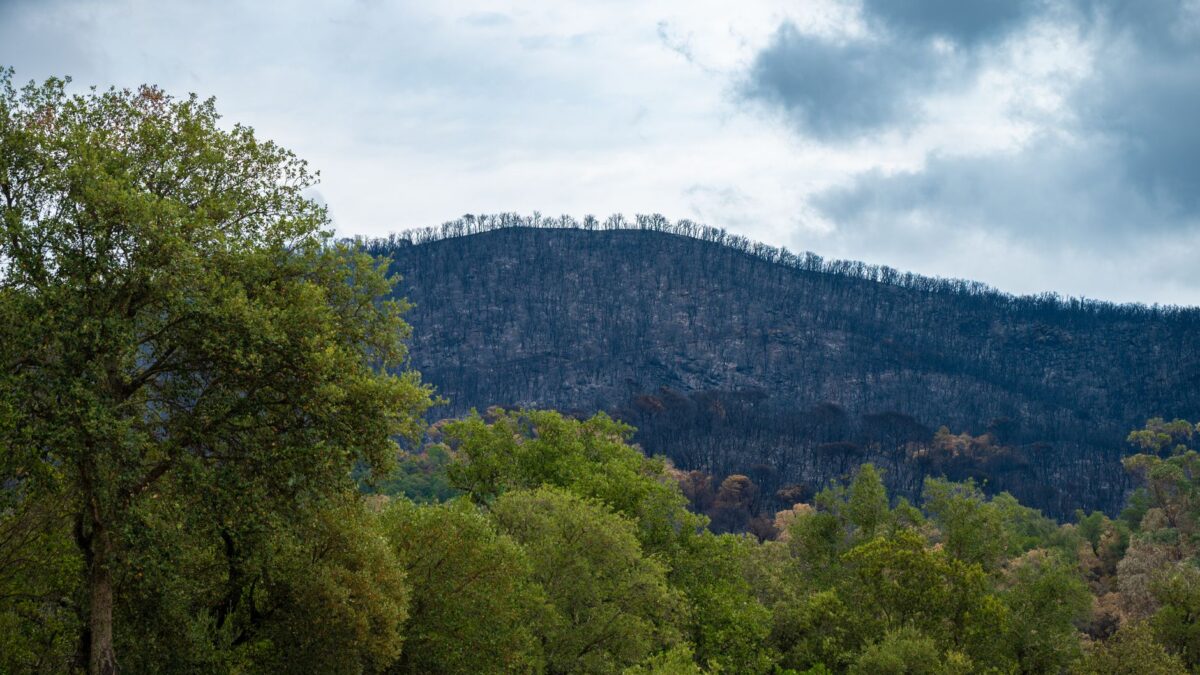
Human-driven climate change made the area burned in northwest Iberia in August 2025 about 2.93 times larger than it would have been in a pre-industrial climate, according to the report The State of Wildfires 2025-2026, released this week and reported by Público.
Portugal was at the centre of that fire season. The Arganil fire burned more than 654 km2 and became the largest ever recorded in the country.
Portugal’s worst fire season on record
Portugal had six fires last year that each burned more than 100 km2. The Arganil fire, which started in Piódão, stayed active for 13 days.
A regional analysis based on MODIS satellite data found the burned area in Portugal was 120% above normal. The European Forest Fire Information System put the total at about 2789 km2, equal to 3% of the national territory.
The report says 513 km2 burned inside protected areas in Portugal, and the Peneda-Gerês National Park was among the places hit or exposed. In one forest carbon project studied in the country, fire reached 79% of its area.
Across Portugal and Spain, the fires in northwest Iberia caused nine of the 14 deaths and more than 90% of the roughly 40 thousand people displaced in the two countries. Both governments activated the EU Civil Protection Mechanism while several large fires burned at once.
How much climate change added
The 2.93 figure covers the region studied, which takes in central and northern Portugal and northwest Spain, so it does not apply to Portugal alone. The authors estimate a fire of similar size is now about four times more likely than it would be without human influence on the climate.
They also looked at the weather itself. Based on observed data, conditions as intense as those of August 2025 would have been “virtually impossible” in the pre-industrial climate, the report says. The models’ best estimate is that such fire weather in northwest Iberia is now 3.63 times more likely, though the authors acknowledge a large margin of uncertainty.
A wet spring, then a dry summer
The study links the severity of the season to a sequence of weather. A wet spring made vegetation grow unusually fast. Then came months of low rainfall, high temperatures and very low humidity, leaving large amounts of dry, connected fuel ready to burn.
During the peak period, from Aug. 10 to 19, temperature and relative humidity anomalies explained more than 70% of the model’s predictions. Wind played a small and slightly negative part. The authors conclude the fires were driven mainly by extreme heat, dry air and the amount of available vegetation, rather than unusually strong winds. The study was published in the journal Earth System Science Data.
What it means for people living in Portugal
The report projects that extreme fire seasons in northwest Iberia will get worse. In a high-emissions scenario the authors consider plausible, events as rare as August 2025 could burn about 78% more area by 2090, and some projections in the same scenario show increases close to seven times.
The projected rise in how often such seasons happen is smaller than the rise in burned area. In other words, the main change would be in the size of extreme fires, according to the study.
Cutting greenhouse gas emissions could limit this. A path in line with the Paris Agreement goals would reduce the projected burned area at the end of the century by more than a third compared with a high-emissions scenario, the authors write. Researchers from more than 20 countries, including Portugal, worked on the report.
Source: Público
Site editor: Nikita Sheikin