Montenegro Rejects Food VAT Cut, Criticizes Housing Camp Protest
Prime Minister Luís Montenegro said protests can give a wrong idea of Portugal and rejected a VAT exemption on food. What he said on housing, taxes and wages.

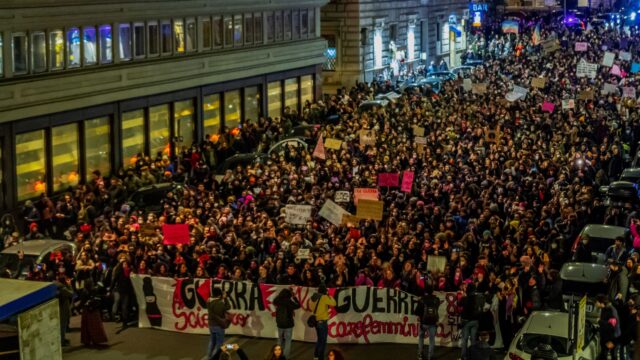
Portugal’s prime minister, Luís Montenegro, took aim at street protests on Monday, singling out the Acampada pela Habitação (a housing protest camp), and said the country’s problems with poverty, low wages, housing and the cost of living can only be fixed by creating wealth. He also rejected calls to drop VAT on the basic food basket, a measure the opposition parties Chega and PS plan to back.
He spoke in Vila Nova de Gaia at a ceremony marking the start of work on the future VGP Park and an industrial plant for Thyssenkrupp Nucera, according to the business news site ECO.
What Montenegro said about the protests
Montenegro said protesting is easy and solving problems is hard. In his view, demonstrations do not fix the issues behind them and can sometimes give a mistaken picture of a country that wants to attract investors.
He said Portugal does not need a revolution, anarchy or chaos. “The country we defend does not need a revolution,” he said, according to ECO, adding that it needs calm, intelligence and ambition. He also said leaders must be able to listen but must be far more able to decide and to act.
The Acampada pela Habitação is one of the housing movements that have taken their demands to the street, and Montenegro named it directly in his remarks.
No VAT exemption on the food basket
The prime minister criticized those who, in his words, demand measures for everything and want to please everyone at once. ECO reported this was a reference to Chega and the Partido Socialista (PS, the Socialist Party), which are set to propose removing IVA (Portugal’s value-added tax) from the food basket.
Montenegro said the government cannot and should not do this. He argued that financial stability gives the state more money for public services, social policy and investment. He repeated that every kind of poverty, including financial, energy and housing poverty, is solved only through creating wealth.
Lower business taxes and faster licensing
Montenegro defended his government’s plan to attract investment, cut the tax burden and speed up licensing. He said companies that can invest, grow and hire will create jobs, raise pay and give the country more means to deal with social problems.
He added a condition on faster approvals. “Deciding fast does not mean saying yes to everything,” he said, criticizing past years when, he said, projects were approved without criteria and never left the drawing board.
On corporate tax cuts, he said the savings should go into technology, innovation and research and into higher wages. He said the government does not want lower taxes simply to make shareholders and owners richer.
Montenegro also linked renewable energy to competitiveness, saying more renewables reduce dependence on imports and give Portugal and Europe more economic autonomy.
Why Gaia was the backdrop
The prime minister presented the Gaia investment as proof that Portugal can draw international capital. He cited economic, financial, social and political stability, the country’s location, renewable energy supply and the strong industrial base in the region.
He said the aim is to create skilled jobs and keep young people in the country after the state has paid for their education. For that, he called for closer work between central government, municipalities and regional state offices, mainly on licensing. Montenegro said the Gaia mayor had shown him several projects with groundbreaking ceremonies coming up, and that he would rather come back when the work is finished than attend the first stone.
What it means for residents
For people in Lisbon dealing with high rents and rising prices, the speech sets out the government’s position ahead of the debate on the food VAT proposal: no tax exemption on groceries, and a bet that investment and lower business taxes will lift wages over time. Housing campaigners, including the Acampada pela Habitação, now have a direct public answer from the prime minister to their protests.
The next point to watch is the parliamentary debate on the VAT exemption that Chega and PS intend to defend. ECO did not report a date for it.
Source: ECO
Site editor: Nikita Sheikin