Santos Populares in Lisbon: Dates, Marchas, Arraiais and Transport
Every June, Lisbon's old neighborhoods fill with grilled sardines, basil pots and street parties. How the festival works, what happens on Santo António night and how transport changes.
The Santos Populares (Popular Saints) are Lisbon’s June street festivals, and their high point is the night of 12 to 13 June, the eve of Santo António (St. Anthony). That night the marchas populares, costumed neighborhood parades, march down Avenida da Liberdade, and 13 June is a municipal holiday in Lisbon. The official program, the Festas de Lisboa, is run by EGEAC, the city’s culture company.
Dates and transport details below describe the 2026 edition, which ran from May to 26 June 2026, as published by EGEAC and the transport operators. Use them as a guide for 2027; the city publishes each year’s program and transport plan in the weeks before the festival.
When are the Santos Populares in Lisbon?
The festivities fill most of June, built around three saints’ days. Lisbon celebrates Santo António, born in the city, more than the others.
| Date | What happens |
|---|---|
| Through June | Neighborhood street parties (arraiais), concerts and events of the Festas de Lisboa |
| 12 June (evening) | Santo António weddings, marchas parade on Avenida da Liberdade, busiest night of the arraiais |
| 13 June | Santo António day, Lisbon’s municipal holiday; procession from the Santo António church near the cathedral |
| 24 June | São João (St. John), celebrated mostly in Porto and Braga |
| 29 June | São Pedro (St. Peter), holiday in some other municipalities |
In 2026, EGEAC listed more than 40 events across the city, many free, closing with a concert and fireworks on 26 June. Check public holidays in Portugal for how 13 June affects shops and offices in Lisbon only.
What are the marchas populares?
The marchas are a competition between Lisbon neighborhoods. Each one prepares costumes, a song and a choreography for months, and all of them parade down Avenida da Liberdade on the night of 12 June, starting in the evening. In 2026, 20 marchas competed and 3 more paraded outside the competition, on the theme “Somos Lisboa, Somos Europa” (We are Lisbon, we are Europe). Alfama won, ahead of Alcântara and Madragoa.
Before the parade, the marchas also perform at the MEO Arena in Parque das Nações, starting in May. On the night itself, crowds line the whole avenue, so arrive well before the start for a view.
What is an arraial and where are the best ones?
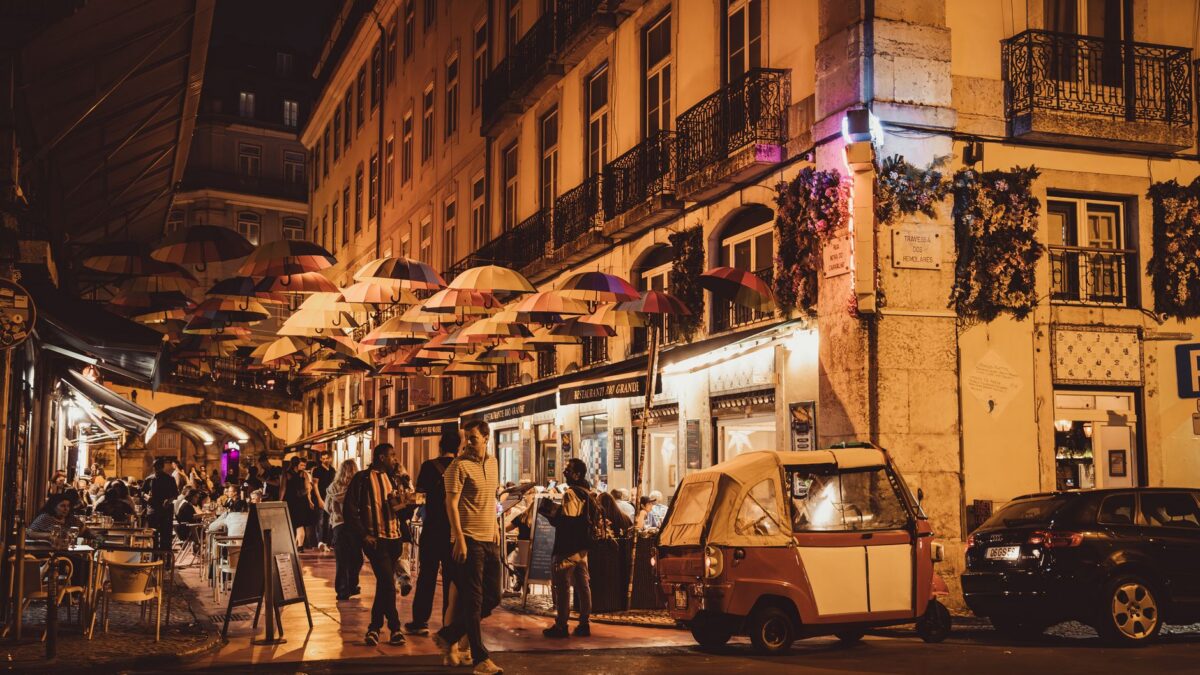
An arraial is a neighborhood street party: strings of paper decorations across narrow streets, grills selling sardines on bread (sardinha no pão) and bifanas (pork sandwiches), plastic cups of beer and sangria, and loud popular music until late. Small pots of basil (manjericos) with a paper carnation and a short verse are the traditional gift.
The oldest neighborhoods hold the largest arraiais: Alfama, Mouraria, Graça, Bica, Bairro Alto, Madragoa and Castelo, plus parties organized by local associations and parish councils elsewhere. Many run on weekends through June and every night around 12 June. Expect crowds that make some streets impassable, especially in Alfama, and bring cash for small stalls.
What are the Santo António weddings?
The Casamentos de Santo António are group weddings on 12 June, a tradition linked to the saint’s reputation as a matchmaker. Couples marry in a ceremony organized with the city, then take part in the evening’s celebrations. The city selects the couples each year under conditions it announces in advance.
How does transport change on Santo António night?
Public transport runs later on the night of 12 to 13 June, and roads in festival areas close. In 2026:
- Metro: according to Metro de Lisboa’s announcement, all four lines ran until 03:00, with the last trains leaving the terminals at 03:00 and six-carriage trains on every line. Connections after the last trains were not guaranteed. Normal hours are 06:30 to 01:00.
- Carris (Lisbon’s bus and tram company): service between midnight and 05:30 on 13 June, including the night bus network (seven lines) and tram 15E between Cais do Sodré and Algés until 03:00.
- Roads: temporary closures around the Santo António church and along the route of the 13 June procession; the parade route on Avenida da Liberdade is also closed to cars during the marchas.
The Navegante pass covers the extended Metro and Carris services; see our guide to the Navegante pass in Lisbon. Strikes or staff meetings can change plans at short notice, as in 2025, when the Metro closed early that evening, so check carris.pt and metrolisboa.pt on the day.
What if I live in a festival neighborhood?
Expect music, crowds and litter late into the night for much of June, especially on weekends and around 12 June. Street parties operate under licences from the city or parish council, which set their hours; your Junta de Freguesia (parish council) can tell you which arraiais are licensed nearby and until when. For noise outside the licensed hours, call the PSP (Portugal’s public security police) or the Polícia Municipal de Lisboa. Parking in the old neighborhoods becomes very difficult, and some streets close to traffic.
Bottom line
If you only go once, go on 12 June: watch the marchas on Avenida da Liberdade, then walk up to Alfama or Graça for the arraiais, and take the Metro home before 03:00. Residents of Alfama, Mouraria and Graça should plan parking and early-morning sleep around the second and third weeks of June.
FAQ
Is 13 June a holiday in all of Portugal?
No. It is Lisbon’s municipal holiday. Other towns have their own municipal holidays, such as 24 June in Porto.
Are the arraiais free?
Yes, entry is free. You pay for food and drinks at the stalls.
Where can I find this year’s program?
EGEAC publishes the Festas de Lisboa program on egeac.pt, and the city posts transport and traffic changes on lisboa.pt in the days before 12 June.