Madeira Airport Wind Delays and Diversions: Rights and Tips
Funchal flights are often held up by wind shear limits at Madeira Airport. See why, what EU passenger rules give you and how to plan a winter trip.
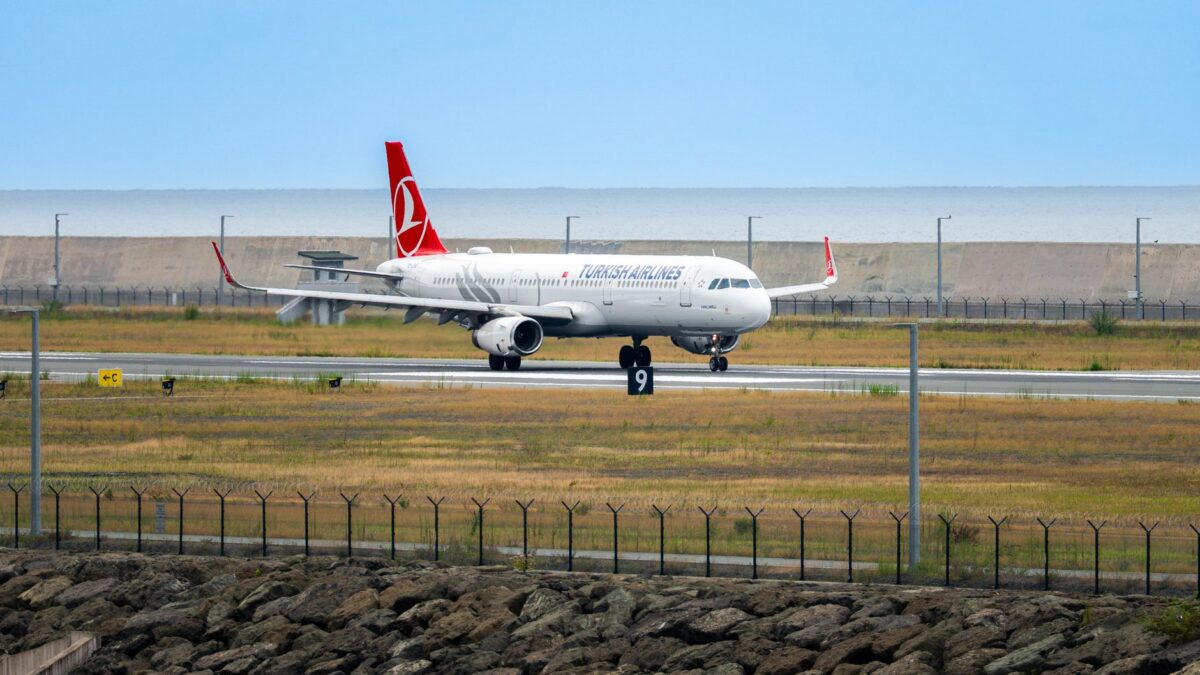
Flights to Funchal are delayed, diverted or cancelled mainly because Madeira Airport works within limits on allowable wind shear, and its runway and approach leave little room to wait out bad conditions. If you live in Lisbon and fly to Madeira in winter, build slack into the trip and know what EU rules give you when a flight fails.
The airport’s own description comes from Wikipedia’s Madeira Airport page, which says the airport suffers frequent operational constraints because of those wind shear limits. Passenger entitlements are set out on the Your Europe air passenger rights page.
Why does wind disrupt flights to Madeira Airport?
The airport sits on a foreland that juts out into the sea, with hills and cliffs at the end of runway 05. Those hills make a direct ILS approach and landing unavailable. Pilots instead fly a visual approach: around the airport, then a turn of roughly 180 degrees before lining up on a very short final approach.
That approach leaves a small margin when gusts or changing wind direction hit the turn. The airport is also described as one of the most perilous in the world, and pilots must complete additional training to land there. When wind shear passes the allowed limit, flights wait, divert or are cancelled.
What does the runway look like?
Runway 05/23 is a tabletop runway with steep drops at both ends. At the start of runway 05 it falls away just before a motorway that curves around the runway end. At the start of runway 23 it drops off a cliff.
The runway is 2,781 m long (9,124 ft) and asphalt. The extension was finished on Sept. 15, 2000. Because landfill was not realistic, part of the runway stands on a platform over the ocean, held up by 180 columns, each about 70 m tall. The airport opened on July 8, 1964, with a single 1,600 m runway.
The terminal and runway are in the civil parish of Santa Cruz, 13.2 km east-northeast of Funchal. ANA Aeroportos de Portugal operates the airport, and Vinci Group owns it.
How busy is the airport, and who flies there?
The airport handled 5,653,000 passengers in 2025, a rise of 12.0% on the year before. It had 38,742 aircraft movements. TAP Air Portugal uses it as a focus city and Ryanair has an operating base there. Most flights go to European destinations, and the airport also moves cargo in and out of the archipelago.
With that many flights through one runway, a few hours of strong wind can push delays through the whole day’s schedule, including the Lisbon rotations.
What happens to my flight when wind closes the approach?
The airline decides whether to hold, divert or cancel, and the rules that follow depend on which of those happens. Under EU rules, Madeira counts as part of the EU, so a flight between Lisbon and Funchal falls under EU air passenger rights whichever airline operates it.
A flight counts as cancelled when your original schedule is abandoned and you are moved to another scheduled flight, when the departure time is brought forward by more than 1 hour, or when the aircraft takes off and has to return to the departure airport. It also counts when the flight lands at an airport that is not your final destination, unless you accept re-routing to your original destination or the two airports serve the same town, city or region. In those two cases the event is treated as a delay.
That last point matters for Madeira. A diversion to another airport that you then travel on from is a different case from a flight that never leaves Lisbon.
Lisbon Brief has covered how storms affected Madeira flights before, for example Storm Bruna, which cancelled dozens of flights.
What can I claim if my flight is cancelled or delayed?
If your flight is cancelled, you can choose between reimbursement, re-routing or return, and you are entitled to assistance at the airport. If the airline told you less than 14 days before departure, you also have a right to compensation. The airline must prove if and when it told you personally.
Compensation is not due if the airline can prove the cancellation came from extraordinary circumstances that could not have been avoided even with all reasonable measures. It has to show this with evidence such as extracts from logbooks or incident reports. The Your Europe page does not list wind or weather as an example, so whether a given wind event counts is something the airline has to show case by case.
For delays, you have the right to assistance, reimbursement and a return flight at departure, depending on how long the delay is and the distance of the flight. If you reach your final destination 3 hours or more late, you are entitled to compensation, unless extraordinary circumstances caused it. If the delay at departure is more than 2 hours, the airline must give you a written notice setting out the rules for compensation and assistance.
- Keep your booking confirmation and boarding pass.
- Write down the times you were told about the delay or cancellation.
- Ask the airline for the written notice of your rights.
- If the airline will not give evidence for an extraordinary circumstance, contact your national enforcement body.
What if I miss a connecting flight?
If you miss a connection and arrive more than 3 hours late, you may be entitled to compensation. This applies when the flights were booked as one reservation, EU air passenger rights apply and extraordinary circumstances did not cause the delay. You get nothing if you miss the connection because of delays at security checks or because you did not respect the boarding time at the transfer airport.
If you are flying from Funchal to a long-haul onward flight, book everything as a single reservation. Separate tickets lose this protection.
How do I plan a winter trip around the wind?
- Leave a buffer of a day before anything you cannot move, such as a wedding, a ferry or a connecting flight home.
- Book flights on a single reservation where possible.
- Check your flight status before leaving for the airport, and follow the airline’s notices.
- Keep a plan for a night in Funchal if the return flight is cancelled.
- Read your travel insurance for weather and delay cover before you pay.
The runway layout and the visual approach mean the airport cannot simply switch to an instrument landing when the wind rises, so a short wait often ends the same day while a longer one does not. The sources give no figure for how often flights are affected. For storms with warnings, Lisbon Brief also reported on Storm Charles and the flights it cancelled.
If something has changed
Check the airport’s own site at aeroportomadeira.pt for current operations, and the Your Europe air passenger rights page for the latest wording on compensation, assistance and what counts as an extraordinary circumstance. Details that tend to change are the compensation thresholds, the notice period for cancellations and the documents airlines ask for when you claim.
Facts from the official pages linked above, as of November 2026.
Site editor: Nikita Sheikin