Calçada Portuguesa in Lisbon: Where to See the Best Pavements
The stone mosaics under your feet are a craft with a shrinking number of professionals and a pending UNESCO bid. Where to find the best patterns, and what to wear to walk them.
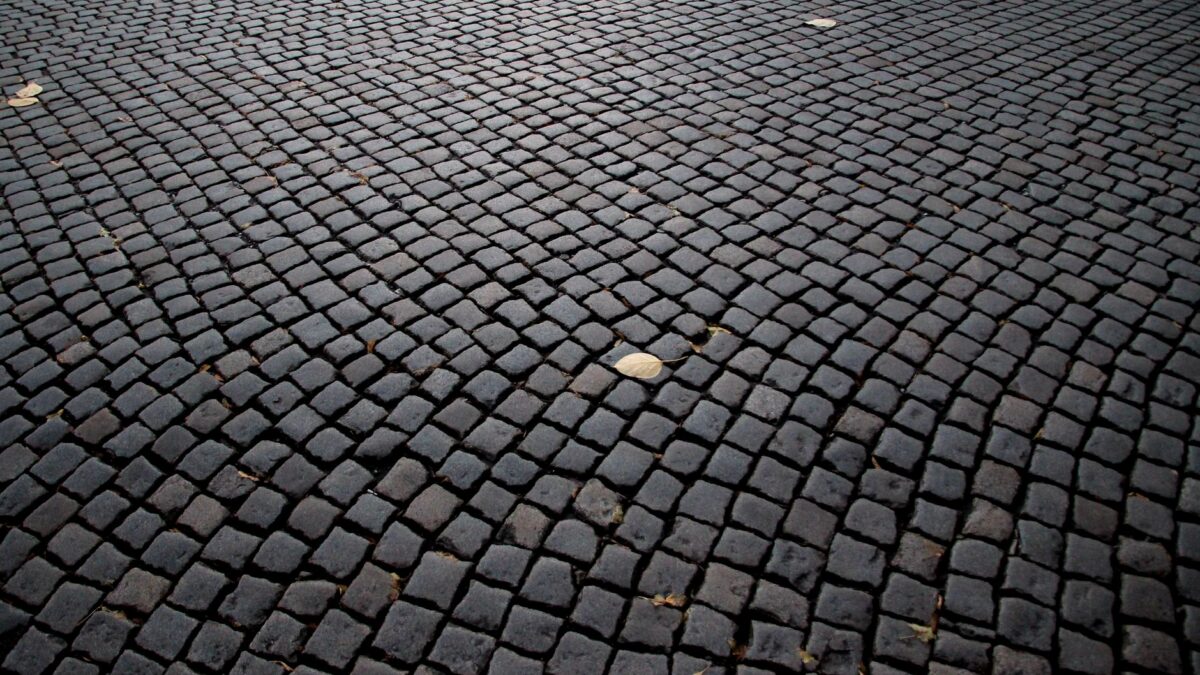
In Lisbon, the sidewalks are hand-laid mosaics, and the people who make them are a vanishing trade: the Associação da Calçada Portuguesa says the city had 400 pavers (calceteiros) in 1927 and 18 in 2020, of whom 11 were active. You can see the best work on foot in the Baixa, free, any time of day. Wear shoes with grip, because the polished stone is slick when wet.
What is calçada portuguesa?
Calçada portuguesa (Portuguese pavement) is a surface of small cut stones, usually white limestone and black basalt, pressed by hand into a bed of sand and gravel and tamped down with a mallet. Pavers lay the pieces in patterns, from plain zigzags to waves, ships and coats of arms.
The craft is called arte e saber-fazer da calçada portuguesa. Portugal added it to its national intangible heritage inventory in July 2021, according to RTP, the public broadcaster.
Where did it start?
The modern style is usually traced to the 1840s, when work on São Jorge Castle used a zigzag of black and white stones. Accounts credit the military engineer Eusébio Pinheiro Furtado with the castle work and with the wave design in the Rossio, laid around 1848. Sources differ by a year or two on the exact dates, so treat them as approximate.
The style then spread across Portugal and to former colonies and to Brazil, where Rio’s Copacabana promenade is the best-known example.
Where can you see the best patterns in Lisbon?
- Rossio (Praça Dom Pedro IV): the undulating black-and-white waves, often called the mar largo (wide sea) pattern. Best looked at from the steps of Teatro Nacional D. Maria II or from a café terrace.
- Praça do Comércio and Rua Augusta: long runs of geometric borders and motifs between the arch and the river.
- Restauradores and Avenida da Liberdade: wide promenades with decorated medians and curves.
- Chiado and Largo do Carmo: smaller patterned squares and crests, easy to combine with a stop at the Carmo ruins.
- Parque das Nações: the modern waterfront district uses contemporary designs and shows the craft is still being laid.
Streets and squares are repaved over time, so a pattern you saw in a photo may have changed. Look at your feet in the old center rather than hunting for a single address.
How do you walk it safely?
Polished limestone is slippery after rain, on slopes and in summer when dust and sunscreen build up. Shoes with rubber soles work best; leather soles and smooth sandals are the usual cause of falls. Strollers and wheeled luggage also bounce badly on the small stones, and uneven or missing stones are common. Watch your step in crowds, where bags and phones are easy targets: see the guide to pickpockets and scams in Lisbon.
Is the craft heading for UNESCO?
An application called Arte e Saber-Fazer da Calçada Portuguesa has been submitted to the Portuguese National Commission for UNESCO. RTP reported that more than 50 pavers, eight municipalities including Lisbon and over 20 institutions took part, and the Turismo de Portugal says it was presented on 14 March 2025 and was under evaluation. As of November 2026 no confirmation of a decision was found, so the listing is a bid, not an inscription.
Can you take a piece home?
Do not pry up stones from the street. Souvenir shops sell small stone-set tiles and coasters; see what to buy in Lisbon for what is allowed through airport security.
What do the patterns mean?
Many early designs refer to the sea. Accounts of the Rossio design say the waves honor Portuguese seafarers, and later patterns add ships, compass roses, city crests and plain geometric borders. Not every pattern has a recorded meaning, and guides sometimes read stories into them, so enjoy the design without expecting a signpost for each one.
Who looks after the craft?
The Associação da Calçada Portuguesa, founded in 2017 on the initiative of Lisbon City Council according to a Turismo de Portugal presentation, leads the preservation effort and the UNESCO application. The RTP report names the threats as fewer master pavers, poor maintenance and construction, competition from other paving types and the decline of the stone industry. If you see crews on their knees laying small stones, that is the craft in action, and they are best left to work without interruption.
When is the best time to go?
Early morning light and low sun in the evening make the black and white contrast sharpest, and the Baixa has fewer crowds before 10:00. Wet days are less pleasant: puddles collect in the dips and the stones are slick. The walk from the Rossio down to the river takes about 15 minutes without stops, and the whole center loop easily fills an hour or two for a slow look.
Bottom line
The Rossio waves are the easiest first stop, and the old center rewards slow walking. The association’s numbers show how few paid pavers remain, which is why the repair of a damaged street can take longer than visitors expect.
FAQ
Is calçada portuguesa free to see?
Yes. The patterns are in public streets and squares and need no ticket.
Is it only in Lisbon?
No. Porto, Braga, Faro, Funchal and other Portuguese cities use it, and so do places in Brazil, Macau and elsewhere.
Is it wheelchair friendly?
Not always. The small stones can be uneven and hard on wheels, so plan a route ahead using Visit Lisboa.
Site editor: Nikita Sheikin