Pombaline Baixa: How Lisbon Was Rebuilt After the 1755 Earthquake
Many downtown buildings hide a wooden lattice built to ride out tremors. What the gaiola is, where to learn about it and a short route through the grid.
In Lisbon, many downtown buildings have a wooden cage built into their walls, a design developed after the earthquake of 1 November 1755. The Baixa is a flat grid of straight streets rebuilt under the Marquis of Pombal, and you can walk it for free in about 90 minutes. Two paid sites explain the engineering: the Lisboa Story Centre and the Carmo Archaeological Museum.
What is the gaiola pombalina?
The gaiola pombalina (Pombaline cage) is a three-dimensional frame of timber set inside masonry walls. The wood bends under shaking, and the masonry adds stiffness and resists fire. After the 1755 earthquake, the downtown was cleared and rebuilt around this system, and the walls between neighboring houses were built higher than the roof so fire would spread less easily.
The story is often told that troops marched around building models to simulate tremors. It could not be confirmed from the sources checked, so treat it as a popular tale, not a documented test.
Who planned the new Baixa?
Under the prime minister Sebastião José de Carvalho e Melo, the Marquis of Pombal, the planners included Manuel da Maia, Eugénio dos Santos and Carlos Mardel. The result was a rectilinear grid between Praça do Comércio, the Rossio and Praça da Figueira. Portugal placed the Baixa on its tentative list for World Heritage status in December 2004. A tentative listing is not an inscription.
Where can you learn about it?
| Place | What you see | Hours and price |
|---|---|---|
| Lisboa Story Centre (Terreiro do Paço, east wing) | A sensory theater on the 1755 earthquake and the city’s history | Daily 10:00 to 19:00, adult tickets around €7 to €7.50 depending on source; shorter hours on 31 December and 1 January; check the operator’s site |
| Carmo Archaeological Museum (Largo do Carmo) | The roofless Gothic church that collapsed in 1755, plus archaeology | Mon to Sat 10:00 to 18:00 (Nov to Apr), 10:00 to 19:00 (May to Oct); adults €7, Portuguese residents €5, closed Sundays, 1 Jan, 1 May and 25 Dec |
Prices are from the Carmo museum’s own information page and visitor guides as of November 2026; the Story Centre price differs between sources, so confirm before you go. Lisboa Card holders get free or reduced entry at both. Portuguese residents should also read the guide to free museum days for residents.
What is a good self-guided route?
- Start at the Rossio and look at the even five-storey fronts on both sides.
- Walk down Rua Augusta, parallel to Rua do Ouro and Rua da Prata, noting the grid.
- Pass under the Arco da Rua Augusta into Praça do Comércio.
- Visit the Story Centre in the east wing if you want the earthquake story.
- Walk back via Rua do Ouro and climb to Largo do Carmo for the ruins.
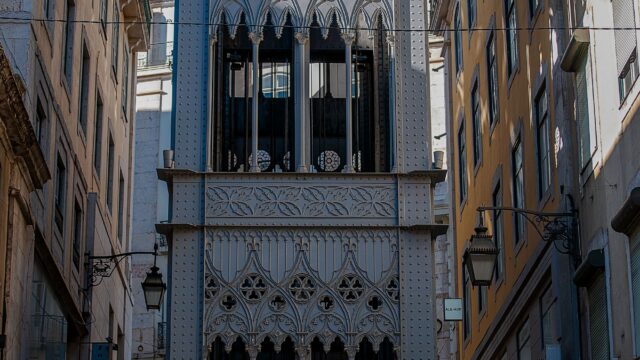
Street names show the original trade guilds, such as gold (ouro) and silver (prata). The route avoids steep hills except the last climb, and the lift next to Rua do Ouro is closed; see Santa Justa Lift status.
Can you see the cage itself?
Usually not. The timber is behind plaster and stone, so visitors rely on museum models and exhibits. Some buildings expose a section during renovations, but there is no public trail that lets you inspect one. Private tours may show cross sections; ask the operator what you will really see.
How do you get to the Baixa?
Metro stations Baixa-Chiado, Rossio and Terreiro do Paço all serve the grid; see the Lisbon Metro guide. Trains from Cascais stop at Cais do Sodré, a short walk west of Praça do Comércio.
What happened to the Carmo church?
The Convento do Carmo church stood on the hill above the Baixa when the 1755 earthquake hit, and its roof collapsed. The nave was never rebuilt, and the roofless arches remain as a memorial. The museum now keeps archaeological pieces in the site, and the ruins are the best place to picture what the city lost before the Pombaline plan replaced it.
What should you look for on the facades?
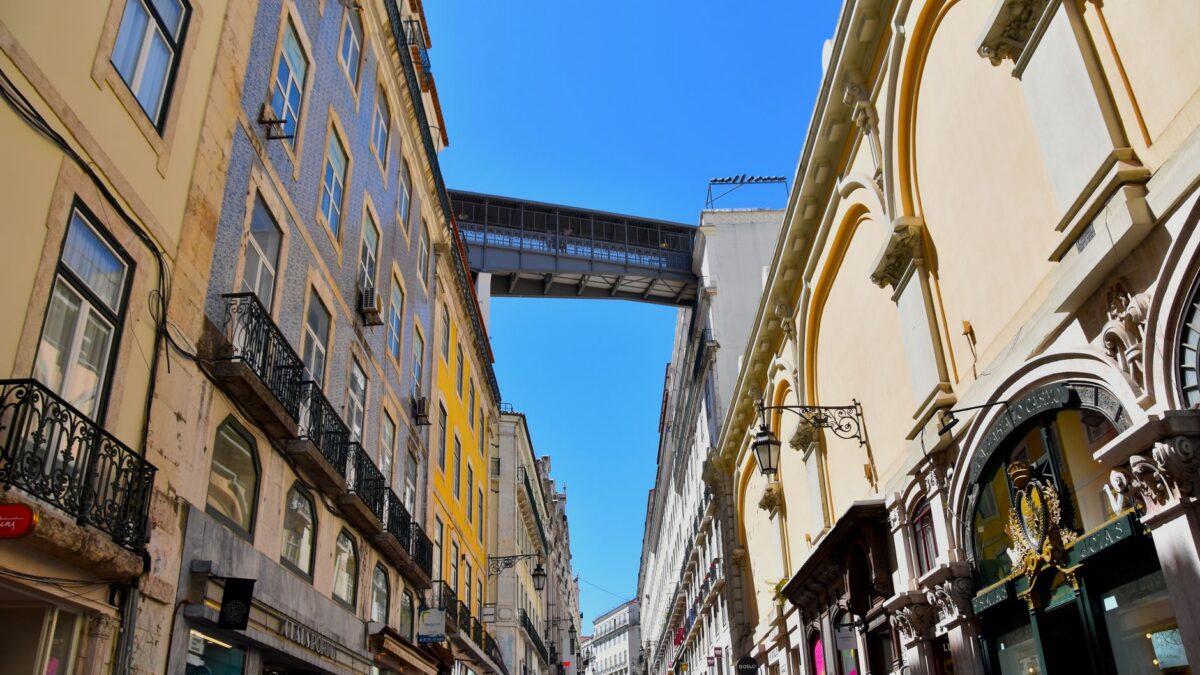
The Pombaline blocks have a uniform look: similar heights, regular window rhythms and ground-floor shops with apartments above. The repeated design came from the planners’ standard rules for the rebuilt streets. Today many fronts have been altered by shops, signs and added floors, so the effect is strongest on streets such as Rua Augusta and Rua da Prata.
Is this walk good with children or reduced mobility?
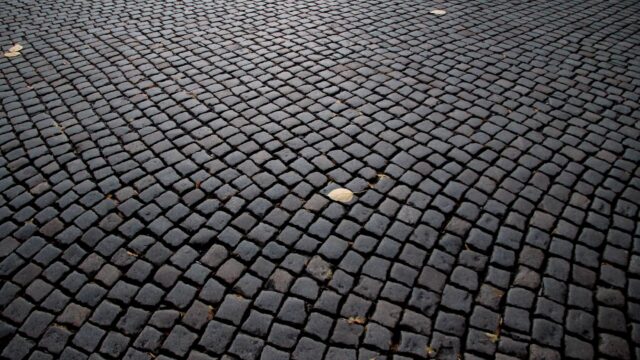
The Baixa is flat and mostly pedestrianized on its main street, though patterned stone pavement can be uncomfortable for wheels, as described in the guide to calçada portuguesa. The climb to Largo do Carmo is the one steep stretch. The Story Centre’s sensory theater may be intense for small children, so check the operator’s age guidance.
Bottom line
The Baixa is both a plan and a structure. Walk it for the grid, then pay for one museum to understand what is behind the walls. If you only have time for one, Carmo is cheaper and shows the damage that made the plan necessary.
FAQ
Are Pombaline buildings safe in earthquakes today?
Engineers study the system, but safety depends on each building’s condition and later alterations. Owners check with an engineer and municipal rules.
How long does the walk take?
About 90 minutes at an easy pace, plus 1 to 2 hours if you add a museum.
Is it free?
Walking the streets is free; museum entry is paid.
Site editor: Nikita Sheikin